Summarize with
Securing an insurance payout for a full roof replacement requires demonstrating that the damage resulted from a covered peril, such as wind, hail, or fire, rather than standard aging. To succeed, a homeowner must document the damage immediately, provide a professional inspection report, and file a formal roof damage insurance claim within the timeframe specified by the policy. Insurance companies typically pay for a full replacement when repairs are not feasible or when the cost to fix specific sections exceeds a certain percentage of the total roof value.
The insurance roof replacement process depends on the distinction between “sudden and accidental” damage and “wear and tear.” Most standard policies cover the former but exclude the latter. Success in this process involves clear communication with adjusters and providing evidence that the roof’s structural integrity is compromised. This guide provides the technical steps and practical strategies needed to manage a claim from the initial storm event to the final check.
Expertise in this field comes from years of assisting property owners with residential roofing services and navigating the complex requirements of national and local insurance carriers. Understanding the specific language adjusters use, and the documentation they require, is the most reliable way to ensure a claim is approved for its full value.
Identify Damage from Covered Perils
The first step in any roof replacement insurance claim is determining if the damage falls under policy protections. Standard homeowners’ insurance policies generally cover damage caused by wind, hail, fallen trees, and fire. According to data from the Insurance Information Institute, wind and hail damage are among the most frequent reasons for property damage claims, accounting for a significant portion of all payouts.
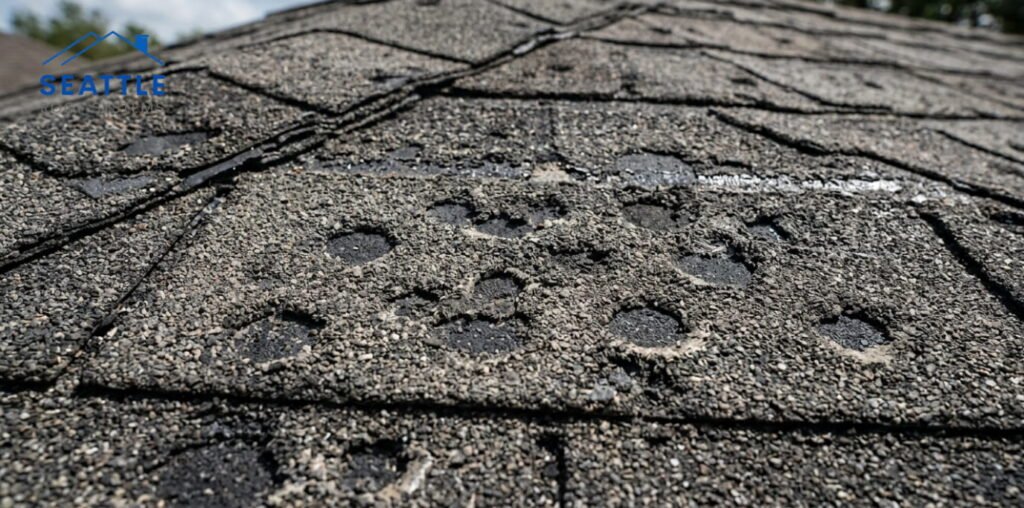
Look for specific signs of storm impact. Hail damage often appears as small, circular indentations or “bruises” on asphalt shingles that have knocked away the protective granules. Wind damage typically manifests as lifted, creased, or entirely missing shingles. If a tree limb falls on the structure, the damage is usually obvious, but the underlying support beams may also suffer hidden fractures.
Routine maintenance issues, such as leaks caused by old flashing or shingles that have reached the end of their natural lifespan, are rarely covered. Insurance companies view these as the responsibility of the homeowner. Differentiating between a storm event and general deterioration is the primary hurdle in the claims process.
Document the Condition of the Property
Evidence is the most important factor in a homeowner’s insurance roof replacement. As soon as it is safe to do so after a storm, take high-resolution photographs of the entire roof from the ground. If a ladder is available and the surface is safe, take close-up photos of damaged areas. Document any interior signs of damage as well, such as water stains on ceilings or moisture in the attic.
Professional documentation carries more weight than homeowner photos alone. Engaging a provider of residential roofing services to perform a detailed inspection provides a technical record of the damage. A professional can identify issues that are not visible to the untrained eye, such as compromised underlayment or thermal seals that have broken due to wind uplift.
Bonus Tip: Maintain a digital folder containing photos of the roof taken before any storm occurs. Having “before” images makes it much harder for an insurance company to claim that existing damage was caused by age or prior neglect.
Understand Policy Types and Payouts
The amount of money received for a claim depends heavily on whether the policy is based on Actual Cash Value (ACV) or Replacement Cost Value (RCV). This distinction determines if the insurance company subtracts depreciation from the payout.
A guide from NerdWallet explains that ACV policies only pay what the roof is worth at its current age, while RCV policies cover the actual cost of installing a new roof at today’s market prices. Many homeowners are surprised to find that an ACV policy on a 15-year-old roof may only cover a small fraction of the replacement cost.
Comparison of Payout Structures
| Feature | Actual Cash Value (ACV) | Replacement Cost Value (RCV) |
| Payout Calculation | Current replacement cost minus depreciation | Full cost to replace with similar materials |
| Out-of-Pocket Expense | High (homeowner pays for the “used” portion) | Low (usually just the deductible) |
| Common Usage | Older homes or lower-premium policies | Standard for most modern homeowners’ policies |
| Impact of Roof Age | Older roofs receive significantly lower payouts | Age has minimal impact on the final payout |
Initiate the Claim and Meet the Adjuster
Once the damage is documented, contact the insurance company to start the roofing insurance claim guide process. The insurer will assign an adjuster to visit the property and verify the loss. It is helpful to have a roofing contractor present during this meeting. A contractor can point out specific damage to the adjuster, ensuring that nothing is overlooked during the brief inspection and that the scope of work reflects all necessary technical requirements.
During this stage, the adjuster will calculate the scope of work. They will look at the “squares” (100 square foot areas) of the roof to determine the total area requiring replacement. If local building codes require certain upgrades, such as new ice and water shields that were not present on the old roof, ensure these are included in the adjuster’s report. These technical variables, along with state-specific regulations, are essential factors to resolve before a final claim decision is reached.
Factors to Consider Before Making a Decision
As the adjuster finalizes their assessment and before you sign a contract or accept an initial check, consider several variables that influence the ultimate outcome of the roof replacement.
- The Deductible: This is the amount the homeowner must pay before insurance covers the rest. If a roof replacement costs $15,000 and the deductible is $2,000, the insurance company will provide $13,000.
- Local Building Codes: In some jurisdictions, if more than 25 percent of a roof is damaged, the entire roof must be replaced to meet current safety standards. This can be a powerful tool in convincing an insurance company to pay for a full replacement instead of a patch.
- Matching Materials: Some states have “matching” laws. If an insurance company cannot find shingles that perfectly match the existing ones, they may be required to replace the entire roof to maintain a uniform appearance.
- Emergency Repairs: If the roof is actively leaking, temporary measures like tarping are necessary. Most policies require homeowners to take reasonable steps to prevent further damage.
Manage the Construction and Final Payment
After the claim is approved, the insurance company usually issues a first check. If the policy is an RCV policy, this first check is often for the ACV (depreciated) amount. The remaining funds, known as recoverable depreciation, are released only after the work is completed and an invoice is submitted.
A report by Forbes Advisor notes that the average cost of a roof replacement ranges from $6,700 to $13,000, though high-end materials can push this much higher. Keeping meticulous records of all expenses, including permits and disposal fees, ensures that the final payout covers all legitimate costs.
Bonus Tip: Never sign a contract that allows a roofing company to keep “whatever the insurance company pays.” This can lead to insurance fraud or subpar materials. Always insist on a fixed-price contract based on a specific scope of work.
Common Questions Regarding Roof Insurance
Homeowners often ask if their insurance premiums will rise after filing a claim. While a single claim for weather damage usually does not cause a rate hike, multiple claims over a short period or a major catastrophe in the local area can lead to increased costs for all policyholders in that region.
Another frequent concern involves the age of the roof. Some companies refuse to provide RCV coverage for roofs older than 15 or 20 years. In these cases, the policy may automatically switch to ACV, or the company might require a certified inspection to maintain full coverage. Knowing the specific terms of the policy before a storm hits is essential for financial planning.
Frequently Asked Questions
Can I replace my roof myself and keep the insurance money?
Most insurance companies require work to be done by a licensed professional to ensure it meets building codes and maintains the home’s value. If the work is not done to professional standards, the insurer may refuse to cover the roof in the future.
What if the insurance company denies my claim?
If a claim is denied, the homeowner can request a second inspection with a different adjuster or hire a public adjuster. A public adjuster works for the homeowner to negotiate a better settlement, though they usually charge a percentage of the final payout.
Is an emergency roof repair covered?
Yes, most policies cover the cost of temporary repairs, such as tarping or minor sealing, to prevent further interior damage. Keep receipts for all materials and labor used for these emergency measures to include in the total claim.
How long do I have to file a roof damage insurance claim?
The window for filing varies by state and policy but is typically between one and two years from the date of the storm. It is always better to file as soon as the damage is discovered to avoid disputes over the timeline.
Summary of the Insurance Process
Getting insurance to pay for a roof replacement is a structured process that relies on clear evidence and a thorough understanding of policy terms. By identifying damage early, documenting the site with photos, and working with professional residential roofing services, homeowners can navigate the claims process effectively. The key is to distinguish sudden storm damage from long-term wear and ensure that the insurance adjuster has a complete view of the loss. Always review whether the policy provides replacement cost or actual cash value, as this determines the final out-of-pocket expense.
Expert Assistance for Your Roof
Seattle Roof Systems provides professional inspections and detailed reports to help homeowners through the insurance roof replacement process. For those needing an emergency roof repair or a comprehensive assessment for a roof replacement insurance claim, Seattle Roof Systems offers technical expertise and reliable residential roofing services. Contact the office at (425) 996-1386 or via email at zoom@seattleroofsystems.com to schedule an evaluation. Working with an experienced team ensures that all damage is properly documented and that the home remains protected against the elements.
Sources
- Insurance Information Institute – Statistics and facts regarding homeowners’ insurance claims and wind/hail damage frequency.
- NerdWallet – An educational guide on how roof insurance works and the differences between ACV and RCV.
- Forbes Advisor – Data on the average costs of roof replacement and factors influencing contractor pricing.