Summarize with
Roof pitch calculation involves determining the vertical rise of a roof over a horizontal distance of 12 inches. This measurement is expressed as a ratio, such as 4:12, which means the roof rises 4 inches for every 12 inches it runs horizontally. Calculating this figure accurately is a fundamental step for any project involving roof repair services or full replacements because it determines the total surface area and the type of materials required.
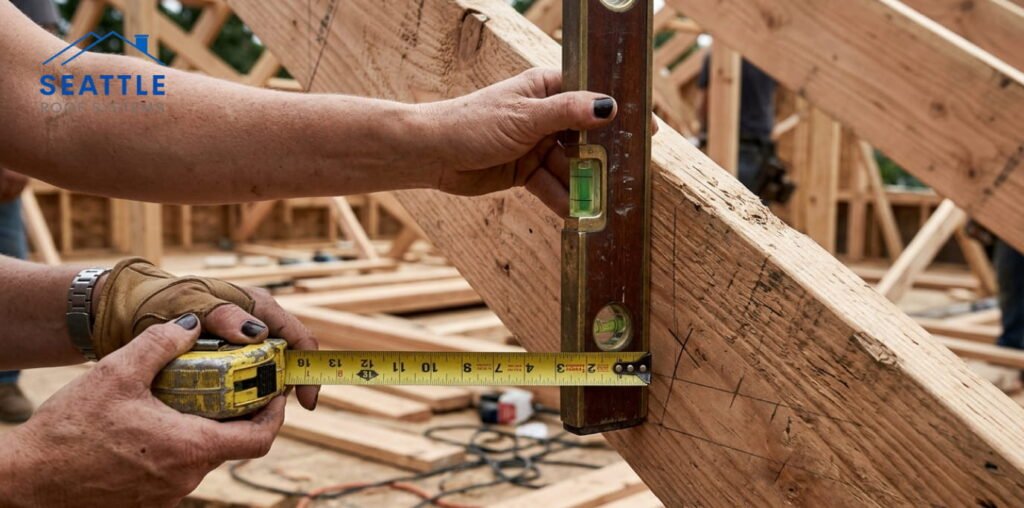
To find the pitch, a level and a tape measure are used to identify the vertical change across a one-foot horizontal span. This process can be done from the top of the roof or from the underside of the rafters within an attic. Precisely measuring roof pitch ensures that drainage systems function correctly and that the structure meets local building codes. Seattle Roof Systems uses these specific measurements to provide accurate estimates for homeowners in the Pacific Northwest.
Understanding the Difference Between Pitch and Slope
While many people use these terms interchangeably, they represent different mathematical concepts in construction. Slope refers to the incline of the roof expressed as a fraction or a ratio of rise over run. Pitch is technically the ratio of the total rise of the roof to the total span of the building. In most modern residential applications, however, the industry has standardized the “x in 12” format as the primary way to discuss how to find roof pitch across different metal roofing systems and architectural styles.
The vertical rise is the height gained as the roof moves toward the peak. The horizontal run is the distance covered sideways. Standardized units are used to keep measurements consistent across different architectural designs. A roof with a 12:12 pitch sits at a 45-degree angle, while a 6:12 pitch is half as steep, which can influence the steel roof installation process and overall construction approach.
Methods for Measuring Roof Pitch from the Rafters
Measuring from the attic is often the safest way to perform a roof slope calculation. It eliminates the need to climb a ladder or walk on potentially slippery shingles. This method requires a standard 12-inch level and a ruler or tape measure.
- Place one end of the level against the underside of a roof rafter.
- Hold the level so the bubble is centered, indicating a perfectly horizontal line.
- Measure the vertical distance from the 12-inch mark on the level up to the bottom of the rafter.
- The resulting number of inches is the rise. If the distance is 5 inches, the pitch is 5:12.
Bonus Tip: Ensure the measurement starts exactly at the 12-inch mark on the level to maintain the standard 12-inch run ratio.
Measuring from the Roof Surface
If attic access is unavailable, the measurement must be taken from the exterior. Safety is the primary concern here. According to safety guidelines from the Occupational Safety and Health Administration (OSHA), falls from heights remain a leading cause of injury in construction, so using proper fall protection is necessary when working on a roof.
To measure from the surface:
- Place the end of the 12-inch level against the roof shingles.
- Hold the level straight until the bubble indicates it is level.
- Measure the vertical gap between the 12-inch point of the level and the roof surface directly below it.
- The measurement in inches becomes the first number in the pitch ratio.
Common Roof Pitch Ratios and Their Corresponding Angles
Different pitches serve specific functional purposes. According to data from the National Roofing Contractors Association (NRCA), the pitch of a roof determines the drainage speed and the suitability of different shingle types.
| Pitch Ratio | Vertical Rise (Inches) | Horizontal Run (Inches) | Angle (Degrees) |
|---|---|---|---|
| 2:12 | 2 | 12 | 9.46 |
| 4:12 | 4 | 12 | 18.43 |
| 6:12 | 6 | 12 | 26.57 |
| 8:12 | 8 | 12 | 33.69 |
| 10:12 | 10 | 12 | 39.81 |
| 12:12 | 12 | 12 | 45.00 |
Impact of Pitch on Material Selection
Beyond simple measurement, the steepness of a roof dictates which materials can be used safely and effectively. Low-pitch roofs, typically defined as those between 2:12 and 4:12, require specific underlayment to prevent water from backing up under the shingles. If a roof is below a 2:12 pitch, it is considered a flat roof and generally requires membrane systems like TPO or EPDM rather than standard shingles.
The Asphalt Roofing Manufacturers Association (ARMA) explains that steep-slope roofs shed water much faster than low-slope roofs. This rapid shedding reduces the risk of leaks but also makes the installation process more labor-intensive. Workers must use specialized brackets and harnesses to remain stable on steep surfaces, which can influence the cost of roof inspection services and repairs.
Factors to Consider Before Finalizing Pitch Measurements
Before relying on a single roof pitch measurement guide, consider these variables that might affect the results.
- Shingle Texture: When measuring from the outside, thick architectural shingles can create an uneven surface. This might lead to a slight error in the vertical measurement.
- Structural Settling: Older homes may have rafters that have sagged over time. It is wise to take measurements in multiple locations to ensure the pitch is consistent across the entire structure.
- Roof Layers: If a home has multiple layers of old roofing, the exterior measurement might differ slightly from the interior rafter measurement.
- Safety Equipment: Always check weather conditions before attempting an exterior measurement. Wind or moisture can make even a low-pitch roof dangerous to walk on.
Bonus Tip: Use a digital pitch finder or a smartphone app for a quick estimate, but always verify with a manual level for precision during construction planning.
Calculating Total Roof Area Using Pitch
The pitch is more than just a ratio for steepness; it is a multiplier used to calculate the actual surface area of the roof. Since a roof is an angled plane, its surface area is greater than the flat footprint of the house. Professionals use a “pitch multiplier” to find the exact square footage. For example, a 6:12 pitch has a multiplier of 1.12. If the base area of the house is 1,000 square feet, the roof area would be approximately 1,120 square feet.
Knowing the exact area is vital for ordering the correct amount of material. Underestimating the area can lead to project delays, while overestimating results in wasted money on excess shingles. Seattle Roof Systems relies on these multipliers to ensure material orders are precise, minimizing waste and keeping project costs predictable.
Common Questions About Roof Steepness
Is a higher pitch always better for drainage?
Generally, a higher pitch allows water and snow to move off the roof more quickly. However, very steep roofs are more susceptible to wind damage. A report from FEMA indicates that moderate pitches often provide a good balance between water shedding and wind resistance in storm-prone areas.
Can the pitch of a roof be changed?
Changing the pitch of a roof is a major structural undertaking. It involves replacing the entire truss system or rafter structure. While possible, it is usually only done during extensive home renovations due to the high cost and labor requirements.
What is the most common residential roof pitch?
Most modern suburban homes feature a pitch between 4:12 and 9:12. This range is steep enough to shed water effectively while remaining manageable for standard roofing techniques.
Direct Answers to Frequent Inquiries
How do I convert pitch to degrees?
To convert the pitch ratio to degrees, you use the tangent function. Divide the rise by the run (e.g., 6 divided by 12 equals 0.5) and find the inverse tangent. For a 6:12 pitch, this results in approximately 26.6 degrees.
What tools are necessary for an accurate measurement?
A standard 12-inch level, a measuring tape, and a pencil are the basic requirements. For more advanced tasks, a framing square or a digital inclinometer can provide higher precision.
Does roof pitch affect the price of a new roof?
Yes, pitch significantly affects labor costs. Steeper roofs require more safety equipment and take longer to navigate. Additionally, certain high-pitch roofs require more shingles because the surface area increases as the incline becomes steeper.
Why does pitch matter for attic ventilation?
The pitch influences the volume of air inside the attic space. Steeper roofs create a larger attic cavity, which requires a specific configuration of soffit and ridge vents to ensure proper airflow and prevent moisture buildup.
Final Thoughts on Roof Incline
Calculating roof pitch is a straightforward process that provides essential data for maintenance and construction. By using the 12-inch run method, any property owner can determine the steepness of their structure. This information guides decisions on material durability, drainage efficiency, and safety requirements. Accurate measurements are the foundation of successful roofing projects, ensuring the structure remains weathertight for years. Always prioritize safety when measuring from the exterior, and consider consulting professional roof repair services if the slope is too steep for comfortable movement.
Professional Support for Your Roofing Needs
Accurate measurements are the first step in maintaining a healthy home structure. Seattle Roof Systems provides expert assistance for residents requiring detailed assessments or repairs. Whether you need professional roof inspection services or a complete replacement, accuracy is guaranteed. You can reach the office at (425) 996-1386 or send an email to zoom@seattleroofsystems.com to discuss your project requirements. Reliable data and quality workmanship ensure your home remains protected against the elements in every season.
Sources
- National Roofing Contractors Association (NRCA) – Professional trade association providing technical information on roofing standards and drainage.
- Occupational Safety and Health Administration (OSHA) – Government agency offering safety regulations and fall protection guidelines for working at heights.
- Asphalt Roofing Manufacturers Association (ARMA) – Industry organization detailing the relationship between roof slope and material performance.
- FEMA – Federal agency providing research on structural wind resistance and weather-related building performance.