Summarize with
Property managers in Seattle tend to learn the hard way that roof problems rarely announce themselves in summer. A slow leak that started during October’s first heavy rain doesn’t usually show up on a tenant’s ceiling until January, by which point insulation is soaked, and the repair bill has tripled.
That lag between cause and visible damage is why timing matters so much when you’re planning a commercial roofing service and why waiting for a leak to appear is often the most expensive decision a building owner can make.
The Seattle Department of Construction and Inspections requires a permit for commercial re-roofing work covering more than 500 square feet, which alone should tell you something about how the city treats roof condition on multifamily and commercial buildings.
Seattle Roof Systems works with property managers across the Puget Sound region, and the scheduling question comes up on nearly every call: when should this actually happen?
The honest answer isn’t “whenever it’s convenient.” By October, property managers who are still looking for a commercial roofing service will start to realize that all the reputable companies in town are booked solid for the upcoming year.
Commercial Roof Maintenance in Seattle, WA, Starts With Understanding the Climate
Membrane adhesives, sealants, and coatings used in commercial roofing service work need dry, stable temperatures to bond correctly, and a crew trying to install a modified bitumen system during a drizzly March afternoon is fighting the material as much as the weather.
This is the core reason commercial roof maintenance in Seattle, WA, looks different from maintenance schedules written for Phoenix or Dallas. A checklist built for a dry climate assumes you can schedule work almost any month.
Any building manager comparing commercial roof maintenance in Seattle, WA, against a generic national checklist will notice the biggest gap is timing, not technique.
Best Time for Commercial Roof Maintenance on Flat and Low-Slope Roofs
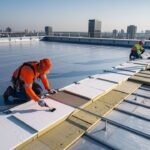
The best time for commercial roof maintenance on these systems is late spring through early fall (May through September). This is the best time when daytime temperatures remain in a window that will allow the sealants to cure and for crews to walk the membrane on wet surfaces safely.
That said, waiting until August to book a commercial roofing service because “that’s peak season” is a common mistake. Contractors are booked solid by midsummer precisely because everyone tries to schedule during the driest months.
That April call, more than anything else, is what separates owners who find the best time for commercial roof maintenance from owners scrambling for whatever slot is left in July.
Building a Commercial Roof Maintenance Schedule That Works
The most costly way to run a commercial roof is the “reactive” approach, whereby a building owner calls a roofer when water starts dripping into a server room or retail floor.
A commercial roof maintenance schedule built around two inspection windows a year, one in spring and one in fall, works as a practical commercial roof inspection guide for catching problems while they’re still cheap to fix.
A commercial roofing service that only shows up when summoned is not the same thing as one working from a documented schedule, and the difference shows up in the roof’s lifespan.
Spring Roof Maintenance
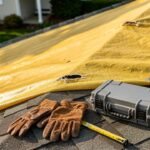
The goal of spring roof maintenance is to evaluate what has transpired in winter. Small cracks in seams of flashing and membrane can be caused by the expansion and contraction of a roof during freeze-thaw. Clogged drains caused by debris from wind storms.
A spring inspection in April or May, before the summer construction rush, gives a commercial roofing service provider time to schedule any needed repairs before the dry window closes.
Buildings that skip commercial roofing service entirely tend to carry small unresolved issues straight into the wet season, where they get worse instead of getting fixed.
Fall Roof Maintenance
Fall Roof Maintenance happens in September or October, ahead of the wet season, and it’s arguably the more important of the two visits.
Skipping this visit is how a small pooling issue in October turns into a ceiling stain by December. Of the two seasonal visits, Commercial Roofing service is the one most owners regret skipping, because it’s the last real chance to prep the roof before Seattle’s wettest stretch begins.
Seasonal Commercial Roof Maintenance Beyond Spring and Fall
Seasonal commercial roof maintenance doesn’t stop at two visits a year for buildings with rooftop HVAC units, solar arrays, or heavy foot traffic from maintenance staff.
A responsible commercial roofing service provider will still check on a building after major storms during the wet months, even if no full maintenance visit is scheduled, because storm damage doesn’t wait for a convenient appointment.
A rooftop mechanical equipment check is typically a third check between the spring and fall visits and is the most cost-effective in buildings with rooftop mechanical equipment. This is where a seasonal commercial roof maintenance plan earns its cost back the fastest.
A Practical Commercial Roof Maintenance Checklist
While each building will be unique, all buildings will have common core areas covered in a good commercial roof maintenance checklist, no matter the roofing material or the size of the building.
| Area | What to Check | Why It Matters in Seattle |
|---|---|---|
| Drains and scuppers | Blockages from leaves, moss, debris | Standing water adds structural load and accelerates membrane failure. |
| Flashing and seams | Cracking, lifting, separation | Wind and temperature swings stress seams first |
| Membrane surface | Blistering, punctures, ponding | Prolonged moisture exposure shortens membrane life significantly. |
| Rooftop penetrations | HVAC curbs, vents, pipe boots | Common leak points, especially after storms |
| Interior ceilings | Staining, moisture, mold odor | Early indicator of a leak that hasn’t surfaced on the roof yet |
Running through this list twice a year, and after any significant storm, is the difference between a commercial roofing service that costs a few hundred dollars in minor repairs and one that turns into a five-figure emergency reroof.
Any commercial roofing service worth hiring should be able to hand over a completed checklist with photos after every visit, not just a verbal “looks fine.”
Preventive Commercial Roof Maintenance and the True Cost of Waiting
Preventive commercial roof maintenance is cheaper than reactive repair, and not by a small margin. A membrane roof that’s inspected and patched twice a year can often reach 20 to 25 years of service life. Maintaining a roof properly can also help building owners delay the high commercial roof replacement cost associated with premature roof failure.
Insurance carriers have started paying closer attention to this too. Buildings that can show a documented maintenance history, inspection reports, photos, and repair records sometimes qualify for better terms on commercial property coverage because the underwriter has evidence the roof isn’t a ticking liability.
That documentation only exists if a commercial roofing service provider is doing consistent, scheduled visits rather than one off emergency calls. Owners who treat commercial roofing service as optional almost always end up paying for it twice, once in the eventual repair and once in higher premiums along the way.
Commercial Roofing Maintenance Tips Building Owners Rarely Hear
Most commercial roofing maintenance tips you’ll find online are generic: clean the gutters, check for leaks, and do nothing specific to a wet coastal climate.
Another point that surprises a lot of building owners: a commercial roofing service provider walking the roof in rubber soled boots after a storm, rather than waiting for a scheduled visit, catches wind uplift damage while it’s still a repair job instead of a full section replacement. Small lifted seams don’t heal themselves.
They get worse with every subsequent windstorm. Of all the commercial roofing services worth remembering, that one, “Don’t wait for the calendar when the weather has already decided for you; it saves the most money over the life of a roof,” is the best.
Roof Maintenance After Storm Events
Western Washington sees its share of windstorms, particularly between November and February, and the National Weather Service tracks precipitation and storm data for the Puget Sound region that consistently shows the heaviest rain and wind events clustering in late fall and winter.
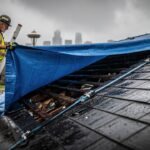
Roof maintenance after storm events shouldn’t wait for the next scheduled inspection. Wind can lift membrane edges, tear flashing loose, or drive debris into rooftop equipment, and any of those problems left unaddressed for a few weeks of continued rain can lead to water intrusion that’s far more expensive to fix than the original damage.
A commercial roofing service provider who knows the building’s roof history can spot new damage quickly because they know what the roof looked like before.
Buildings without an established commercial roofing service relationship often lose valuable time explaining roof history to a new crew before any actual commercial roofing service work can even begin.
Common Mistakes to Avoid
The most frequent error that commercial property managers make is not conducting the fall inspection, which is typically due to the fact that summer maintenance was adequate. It rarely is, given how much debris accumulates through late summer and early fall before the rains start.
Choosing a commercial roofing service based purely on the lowest bid is another one. Roofing membranes and flashing details vary enough between manufacturers and installers that a cut rate job with the wrong materials for Seattle’s moisture levels can fail within a few years, while a properly specified system lasts decades.
Waiting for a visible leak before calling anyone is probably the costliest mistake of all. By the time water shows up on a ceiling tile, it has likely been traveling through insulation and decking for weeks, sometimes months, causing damage far beyond the original point of entry.
A commercial roofing service brought in early almost always costs less than one brought in after the damage is already spreading through the building.
FAQs
What is an average commercial roof inspection time?
A comprehensive walkthrough inspection for most mid sized commercial buildings will require two to four hours, depending on roof size, number of penetrations, and the use of drone or infrared imaging to assess moisture behind roof surfaces.
What’s the average lifespan of a commercial flat roof?
TPO and EPDM membranes will generally have a lifespan of 20-30 years, provided that they are properly maintained. The life of built up roofing can be the same. That figure decreases dramatically, even by half, if maintenance isn’t provided.
Will maintenance be able to take place during occupancy?
Yes, in most cases. Interior operations are not affected by roof work unless the interior of the building is being accessed for leak repairs, in which case the crews will try to schedule their work around the business hours for tenant-heavy buildings.
What is the difference in the cost of a routine inspection and emergency repairs?
The cost of routine inspections is around a few hundred dollars. Repairs for leaks, particularly inside water damage, can often be thousands, and multiple sections can cost more than that.
Should Seattle need permits for roof repairs in addition to roof replacements?
It depends on scope. Minor repairs like patching flashing usually don’t need a permit, but work involving more than 500 square feet, or any change to insulation or roof structure, typically does under SDCI rules.
Is moss removal really necessary on a flat commercial roof?
Yes, especially on buildings near mature trees or in shaded areas common throughout Seattle neighborhoods. Moss holds moisture against the membrane and can work into small seams over time.
Do older buildings in neighborhoods like Ballard or Fremont need different maintenance approaches?
Often yes. Many older commercial buildings in those areas have roofs retrofitted over original structures, sometimes with mixed materials or aging drainage systems that need closer attention than a newer build.
How does Seattle’s rainy season affect scheduling for larger commercial reroofs?
Larger reroofing projects almost always need to be scheduled during the drier months, typically June through September, since full membrane replacement requires extended dry conditions to install and cure properly.
Get Your Roof Assessed Before the Rain Returns
Waiting until a leak shows up inside your building means the damage already started weeks earlier.
Seattle Roof Systems works with property managers across Seattle to build maintenance schedules that fit the region’s climate, not a generic template written for a drier part of the country.
Call (425) 996-1386 or email zoom@seattleroofsystems.com to schedule a commercial roofing service visit before the next wet season sets in.
Sources
- Seattle Department of Construction and Inspections, “Re-Roof Permit.” Official city guidance on when a commercial re-roofing permit is required, including the 500 square foot threshold.
- National Weather Service, Seattle/Tacoma Weather Forecast Office, Western Washington Climate Information. Regional precipitation and storm pattern data for the Puget Sound area.
- Washington State Department of Labor and Industries, Contractor Registration. Licensing requirements for roofing contractors operating in Washington State.