Summarize with
When it comes to replacing a roof, most building owners in Seattle begin considering the replacement of the roof after a tenant complains about a stain on a ceiling tile, not before. By that time, the Seattle Department of Construction and Inspections is already in the mix, because a crew can’t install a membrane over any commercial roofing project larger than 500 square feet until a permit is obtained.
That single rule catches many owners off guard, and it’s worth understanding before calling a commercial roofing service for a quote. At Seattle Roof Systems, we’ve priced jobs ranging from single story retail buildings in Ballard to 40,000 square foot warehouses in Georgetown, and the spread between those projects is bigger than most owners assume.
This guide covers what drives Commercial Roof Replacement Cost in Seattle, WA, where national cost calculators get this market wrong, and what a realistic budget looks like by roofing system.
Commercial Roofing Costs in Seattle
Commercial Roofing Costs in Seattle run higher than the national averages most online calculators cite, and the gap isn’t random. King County construction labor rates sit among the highest in the country, crews need to budget extra days for rain delays during at least half the calendar year, and the region’s older building stock means more decking repairs get uncovered once tear off starts.
Low slope commercial systems generally cost about $5 to $20 per square foot installed. Insulation requirements and membrane type account for much of the difference. EPDM overlays typically fall near the low end, while modified bitumen systems with upgraded insulation can reach the high end. A commercial roofing service should account for Seattle’s energy code before providing a final estimate.
Cost to Replace a Commercial Roof
The Cost to replace a Commercial Roof is highly dependent on which membrane is being installed, along with the warranty, service life, and labor requirements of each system’s membrane. A Commercial Roofing service can also help compare these systems based on the building’s expected service life and maintenance needs. Here’s how the major commercial systems typically price out in the Seattle metro area:
| Roofing System | Installed Cost (per sq ft) | Typical Lifespan |
|---|---|---|
| Built up (BUR) asphalt | $6 to $10 | 15 to 20 years |
| TPO single ply membrane | $8 to $14 | 20 to 25 years |
| EPDM rubber membrane | $6 to $12 | 25 to 30+ years with maintenance |
| Modified bitumen (2 ply) | $10 to $20 | 20 to 25 years |
| Standing seam metal | $14 to $28 | 40 to 50+ years |
These figures include tear off, disposal, insulation, and installation labor but exclude major deck repairs. A commercial roofing service should identify potential deck damage during the initial inspection and establish a commercial roof inspection schedule to help monitor the roof before replacement becomes necessary.
Flat Roof Replacement Cost in Seattle
Flat Roof Replacement Cost in Seattle carries its own set of variables because flat and low slope roofs handle standing water differently than pitched systems. Drainage design becomes a bigger part of the bid than most owners expect.
A roof with clogged or undersized internal drains often needs additional tapered insulation to correct ponding before the new membrane goes down, and that work isn’t always visible until the old roof comes off. A Commercial Roofing service should check drainage and ponding areas before finalizing the replacement estimate.
Seattle receives about 39 inches of precipitation annually, according to the National Weather Service, making drainage important for commercial flat roofs. Tapered insulation, properly sized drains, parapet flashing, and regular drain inspections can add to the initial Flat Roof Replacement Cost in Seattle, but help reduce water related damage.
Factors Affecting Commercial Roof Replacement Cost
Factors Affecting Commercial Roof Replacement Cost go well beyond square footage. A handful of variables consistently move a bid up or down by thousands of dollars.
Tear off complexity ranks near the top. A roof with two or three old layers stacked on top of each other, common on buildings re-covered rather than fully replaced over the decades, takes longer to remove and generates more disposal tonnage than a single layer tear off.
Rooftop equipment adds another cost layer, since HVAC units, exhaust fans, and satellite equipment all need to be detached, protected, and reset, and older curbs sometimes need replacement to meet current flashing standards. A Commercial Roofing service can identify these conditions before work begins and include likely removal costs in the estimate.
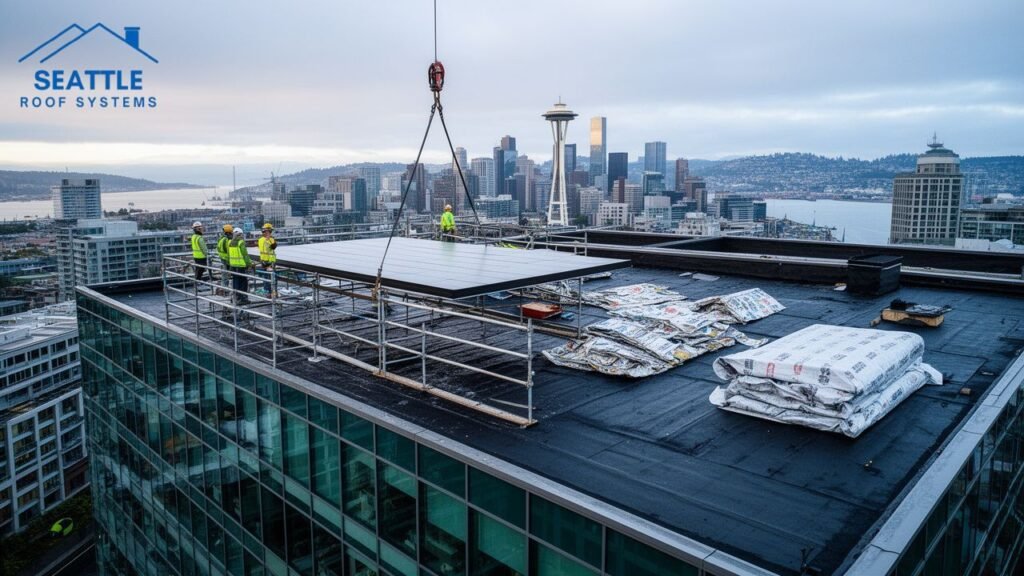
Building height and roof access can affect costs more in dense Seattle areas than in suburban business parks. Buildings on narrow sites may need materials moved through a single access point, increasing labor time and crane or hoist costs. Seasonal timing also matters, as wetter months can lead to delays.
Owners booking a commercial roofing service for late spring or summer installation typically get more consistent weather windows, while winter jobs need contingency scheduling for wet decking days when membrane can’t be safely applied.
TPO Roof Replacement Cost vs. Metal Roof Replacement Cost
TPO Roof Replacement Cost and Metal Roof Replacement Cost sit at opposite ends of the upfront budget, and the right choice depends on how long the owner plans to hold the building. TPO is heat welded, not glued at the seams, and is highly resistant to failure in the seams that are common in older membranes with adhesive seams.
The replacement of a roof with TPO typically costs between $40,000 and 70,000 per 5,000 square feet of area on a typical flat roof, depending on the thickness of the insulation and the condition of the roof deck.
Upfront, standing seam metal is more expensive, but can last for 20 to 30 years. For long term ownership, the higher initial Metal Roof Replacement Cost may make sense. Owners who anticipate selling their roofs within 5 to 10 years may opt for TPO or well maintained EPDM.
Age, Deck Condition, and Rooftop Access
A roof deck that has been leaking for years often has hidden plywood or steel deck damage that only shows up once the membrane comes off. This is the single biggest source of cost overruns on commercial reroofing projects in this region, driven directly by Seattle’s climate rather than poor construction.
A commercial roofing service builds a per square foot deck repair contingency into the proposal rather than presenting a number that assumes a perfect deck underneath. Rooftop access adds its own swing.
Buildings with an internal hatch and freight elevator move materials far cheaper than buildings requiring a boom lift or crane for every pallet of insulation, and two identical roofs on different buildings can land tens of thousands of dollars apart purely on logistics.
Commercial Roof Replacement Pricing
Commercial Roof Replacement Pricing is easier to plan around once a roofing system is evaluated by a commercial roofing service to determine the size of the roof, existing roofing system, and what needs to be replaced.
A Sample Commercial Roofing Cost Guide
The following is a simplified Commercial Roofing Cost Guide of total ranges for a mid size commercial building in the Seattle area, based on a 10,000 sq ft roof.
| System | Estimated Total Project Cost |
|---|---|
| TPO membrane | $80,000 to $140,000 |
| EPDM membrane | $60,000 to $120,000 |
| Modified bitumen | $100,000 to $200,000 |
| Standing seam metal | $140,000 to $280,000 |
These ranges assume standard access and a deck in reasonably sound condition. Owners working with a commercial roofing service should ask for a written estimate that separates the base membrane cost, insulation upgrade cost, and a defined per sheet or per square foot rate for any decking discovered during tear off.
That structure protects both sides from disputes once the project is underway, and it’s the same format a commercial roofing service should be willing to walk through line by line before a contract gets signed.
Permits and Seattle’s Energy Code Rules
Every commercial re-roofing project over 500 square feet in Seattle needs a re-roof permit through SDCI, and that permit exists partly to confirm the new roof meets current energy code insulation standards.
If the existing roof cavity is exposed or under insulated during tear off, the code generally requires bringing insulation up to current R value standards rather than simply matching what was there before.
That single requirement is why two buildings of the same size can receive very different quotes from the same commercial roofing service, since one may already meet code and the other may need a full insulation upgrade.
Rooftop HVAC work may require additional mechanical permits. Coordinating that work with the roof replacement can reduce delays and additional mobilization costs. A commercial roofing service familiar with SDCI requirements can help estimate the permit timeline.
How Roofing Choices Affect Building Operations
The roofing system selected for a roof replacement can affect maintenance requirements, energy performance, and how the building is used during the roof’s service life. Membrane systems may offer a practical option for low slope buildings, while metal systems can provide a longer service life when the higher initial cost fits the property’s budget.
A Commercial Roofing service can help evaluate these differences based on the building’s size, existing roof assembly, drainage design, and expected ownership period. The goal is to select a system that fits the property’s physical requirements rather than choosing based on the lowest initial price alone.
Building use should also be considered before work begins. A commercial roofing service can factor in rooftop machinery, access, tenant activity, and areas that are going to require continued access throughout the roofing job. The information may impact the choice of roofing system as well as overall replacement cost.
FAQs
How long does it take to replace a commercial roof?
Weather permitting, the majority of projects in the 5,000 to 15,000 sq.ft. range are completed in one to three weeks from the tear off to final inspection. The larger the building, or the more extensive the deck needs repaired, the longer it will take, and in the fall and winter months, rain can cause the timelines to be even longer than the summer installation time.
How to keep a building open when replacing the roof?
In most cases, yes. Reroofing is done from the outside, so crews can schedule noisy work around building operations. Brief HVAC shutdowns may be needed during unit resets.
What warranty should a commercial roof have?
The manufacturer’s warranty on the membrane materials will vary from 15 years to 30 years, depending on the type of system, and the workmanship warranty of the installing contractor will typically be 2 to 10 years. It is important to note what is covered and what is not covered by each warranty, as improper installation of rooftop equipment by another trade can result in the loss of coverage of the roofing membrane.
Is it worth getting more than one estimate?
Yes. Owners should solicit 2 to 3 written bids that provide a separate line item for material, labor, permit, and contingencies. It’s more difficult to make a fair comparison between estimates where only one lump sum number is provided, and it’s more likely to mask the actual areas of cost differences.
Does Seattle’s weather affect commercial roof replacement?
Yes. Seattle’s frequent rain can affect scheduling, especially during fall and winter. Wet decking may also need to dry before certain roofing materials can be installed. Building owners should allow some extra time in the schedule when planning a commercial roof replacement during wetter months.
Do commercial roofs in Seattle need a permit?
Yes. Commercial re-roofing projects over 500 square feet in Seattle require a permit from the Seattle Department of Construction and Inspections. Energy code requirements may also apply, particularly when existing insulation is exposed during the work.
Which commercial roof is best suited for Seattle’s buildings?
Seattle commercial buildings can use different roofing systems depending on the property. TPO and EPDM are common for low slope roofs, while some buildings may be better suited to modified bitumen or standing seam metal. The choice usually comes down to the roof’s drainage, insulation, access, deck condition, and how long the owner expects it to last.
What’s the average time it takes to replace a commercial roof in Seattle?
Seattle commercial roof replacement projects usually take 1 to 3 weeks for buildings between 5,000 and 15,000 square feet. Rain, multiple layers of old roofing, or damaged decking discovered during tear off can add more time.
Get a Written Estimate for Your Building
A roof replacement is one of the larger expenses a commercial property owner will face, so getting a clear estimate from a commercial roofing service matters. The initial quote may change once the roof is opened up and hidden damage or other repair needs are found.
Seattle Roof Systems puts together itemized proposals that separate membrane cost, code required insulation upgrades, and deck contingency pricing as a commercial roofing service, so building owners know what they’re actually paying for before work begins. Contact us at (425) 996-1386 or email zoom@seattleroofsystems.com to schedule a roof inspection and get a written estimate for your building.
Sources
- Seattle Department of Construction and Inspections, Re-Roof Permit. Official city guidance on when a commercial re-roof permit is required.
- National Weather Service, Seattle/Tacoma Climate Information. NOAA climate normal data for the Seattle Tacoma International Airport station.
- National Roofing Contractors Association. Industry data on how structured commercial roof maintenance programs affect membrane service life.
- Washington State Building Code Council. State regulatory reference for the insulation values, including the R 38 standard for above deck roof insulation.