Summarize with
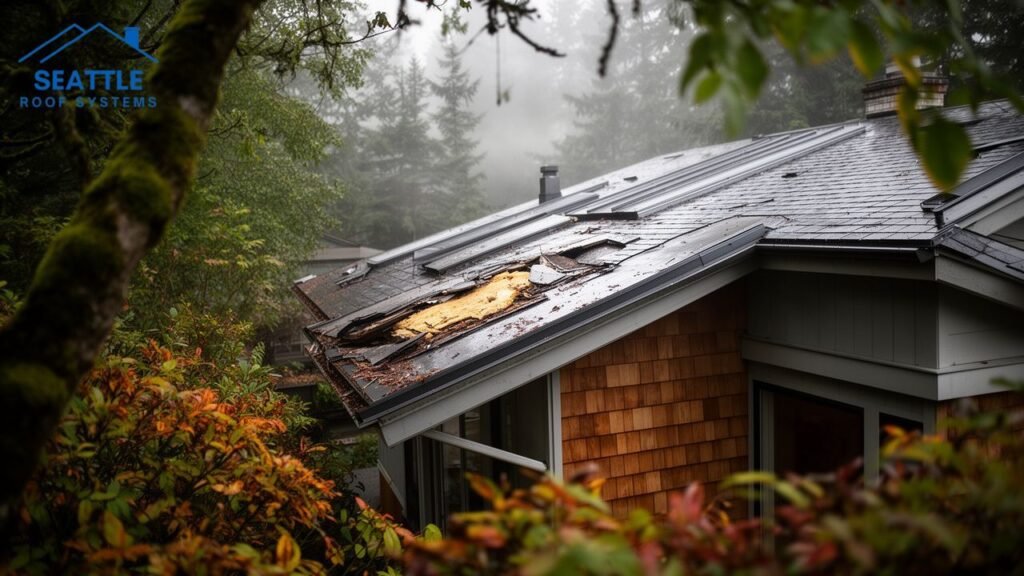
Seattle weather causes roof leaks by subjecting materials to constant moisture, which fosters biological growth and degrades sealants. Unlike regions with heavy downpours, the persistent mist and cloud cover in the Pacific Northwest prevent roofs from drying completely. This chronic dampness leads to rotted wood decking, compromised underlayment, and eventually, water intrusion into the home.
The unique combination of high humidity, seasonal windstorms, and a high density of coniferous trees creates a specific set of challenges for local structures. Proper Seattle roof leak repair requires understanding how these local environmental factors interact with different roofing materials over time. This guide examines the specific weather patterns that accelerate roof failure and offers practical steps for long-term protection.
The Impact of Persistent Precipitation on Shingle Integrity
Rain is the most obvious factor in Pacific Northwest roof degradation. While Seattle does not always have the highest total rainfall in the country, it has a high frequency of “rain days.” According to data from the National Oceanic and Atmospheric Administration, Seattle experiences measurable precipitation on average 150 days per year.
This frequency means roofing materials rarely have the opportunity to dry out fully between October and May. When shingles remain damp for weeks at a time, the adhesive strips that bond shingles together can weaken. Once these seals fail, wind can easily lift the edges, allowing water to blow underneath. This type of rain damage roof repair is common in older homes where the shingles have lost their original flexibility.
Constant moisture also affects the granules on asphalt shingles. These granules protect the underlying asphalt from ultraviolet rays. As water repeatedly flows over the surface, it carries these granules away, leaving the shingles brittle and prone to cracking.
Moss Growth and Biological Degradation
The combination of shade from Douglas firs and constant moisture makes Seattle a perfect environment for moss and algae. Moss is not just a cosmetic issue; it acts like a sponge, holding water against the roof surface for extended periods. As the moss grows, its roots, known as rhizomes, can lift the edges of shingles and even work their way into the wood decking.
A report by the International Association of Certified Home Inspectors indicates that moss growth can significantly shorten the lifespan of a roof by trapping moisture and causing the wood underneath to rot. When the wood decking softens, it can no longer hold nails securely, leading to loose shingles and more entry points for water.
Bonus Tip for Moss Management
Install zinc or copper strips near the roof peak. When it rains, the water reacts with the metal to release ions that inhibit moss and algae growth further down the slope. This is a standard preventive measure for roofing services in Seattle, WA.
Temperature Fluctuations and Thermal Expansion
While Seattle rarely experiences extreme heat or deep freezes, the frequent fluctuation around the freezing mark causes stress. This is often called the freeze-thaw cycle. When water gets into small cracks in shingles or masonry and then freezes, it expands. This expansion widens the cracks, allowing even more water to enter when the ice melts.
Over several seasons, this cycle can pull apart flashings around chimneys and vents. Flashing is the metal material used to direct water away from critical areas. In the Pacific Northwest, these transition points are common causes of roof leaks because the sealant used to secure them can crack under repeated thermal expansion.
Wind and Debris Damage During Storm Seasons
Late fall and winter often bring windstorms to the Puget Sound region. These winds can reach speeds high enough to tear away shingles that have been weakened by moisture. Additionally, Seattle’s many trees pose a risk. Wind can snap branches that then fall onto the roof, puncturing the surface or scraping away the protective granule layer.
Leaves and pine needles also accumulate in roof valleys and gutters. When gutters clog, water backs up under the eaves and shingles. This leads to ice dams in the winter or simple overflow that rots the fascia boards and soffits.
Material Performance in the Pacific Northwest
Choosing the right material is vital for roof leak prevention. Different products react differently to the damp, shaded conditions common in local neighborhoods.
| Roofing Material | Moisture Resistance | Moss Risk | Average Lifespan in PNW |
|---|---|---|---|
| Asphalt Shingles | Moderate | High | 15 to 22 Years |
| Metal Roofing | High | Low | 40 to 70 Years |
| Composite/Synthetic | High | Moderate | 30 to 50 Years |
| Wood Shakes | Low | Very High | 15 to 20 Years |
Metal roofing often performs better in Seattle because it sheds water quickly and does not provide a porous surface for moss to take root. However, asphalt remains the most common choice due to its initial cost-effectiveness.
Things to Consider Before Making a Decision
When evaluating how the weather affects your roof, several factors should influence the choice of repairs or replacement.
- Tree Canopy Coverage: Homes in heavily wooded areas like Blue Ridge or Magnolia face higher moss risks and debris accumulation.
- Roof Pitch: Flatter roofs do not shed water as quickly as steep ones, making them more susceptible to leaks in a rainy climate.
- Attic Ventilation: Proper airflow is necessary to keep the roof deck dry. According to the Department of Energy, poor ventilation leads to moisture buildup in the attic, which can rot the roof from the inside out.
- Existing Layers: In some cases, homeowners add a second layer of shingles. In a damp climate, this can trap moisture between the layers and lead to premature failure.
Bonus Tip for Gutter Maintenance
Ensure your gutters have a slight pitch toward the downspouts. In Seattle, roofing weather damage often starts at the edges where standing water in gutters “wicks” up into the roof’s starter shingles.
Common Questions Regarding Seattle Roofs
Many homeowners wonder if they can wait until summer for Seattle roof leak repair. Delaying repairs during the rainy season often leads to much higher costs because the water continues to damage the interior structure. Most professional teams use temporary “dry in” methods, like heavy-duty tarping or specialized cold process sealants, to stop leaks even when it is currently raining.
Another common question involves the safety of pressure washing. While it removes moss quickly, the high pressure can strip the protective granules off shingles and force water under the laps. Low-pressure chemical treatments are generally preferred for moss removal in the Pacific Northwest.
Addressing Frequent Concerns
How often should a Seattle roof be inspected?
Professional standards suggest an inspection every two years. Given the high frequency of wind and rain in the region, catching small issues like cracked caulking or shifted shingles early prevents major internal water damage.
Does moss actually cause leaks or is it just ugly?
Moss causes leaks. It acts as a bridge that allows water to travel upward and over the top of shingles through capillary action. Once the water gets behind the shingle, it hits the underlayment and eventually the wood deck.
Can a new roof be installed during the rainy season?
Yes, but it requires specific techniques. Professional crews monitor weather windows and work in sections to ensure the house remains protected. High-quality synthetic underlayments provide better moisture protection during installation than traditional felt paper.
What are the first signs of a leak from the inside?
Look for bubbling paint on the ceiling, dark spots in the attic, or a damp smell in closets. In Seattle, because the rain is often light, a leak might not manifest as a steady drip but rather as a slow “seep” that causes mold before it causes a puddle.
Identifying Reliable Solutions
Managing a roof in this climate requires a proactive approach. Regular maintenance and debris removal, as discussed previously, are the most effective ways to extend the life of any roofing system. When leaks do occur, addressing them immediately is vital to prevent structural rot. High-quality materials like architectural shingles or metal panels offer the best defense against the specific challenges of the Pacific Northwest.
Homeowners should evaluate their roof’s age and the surrounding environment every autumn before the heavy rains begin. Identifying worn sealants or moss clusters early can save thousands of dollars in emergency repairs. Seattle Roof Systems provides detailed assessments to help identify these vulnerabilities before they become active leaks.
Effective Maintenance and Repair
For assistance with Seattle roofing weather damage, a professional evaluation is the most reliable path. Seattle Roof Systems offers expert inspections and repair services tailored to the local climate. Maintaining a dry home requires a combination of quality materials and consistent upkeep.
For more information or to schedule an evaluation, contact Seattle Roof Systems at (425) 996-1386 or via email at zoom@seattleroofsystems.com. Taking action before the next major storm helps ensure the longevity of the structure and the safety of the interior environment.
Sources
- National Oceanic and Atmospheric Administration – Provides historical precipitation and weather frequency data for the Seattle region.
- International Association of Certified Home Inspectors – Offers technical research on the structural impact of moss and moisture on residential roofing.
- Department of Energy – Provides guidelines on attic ventilation and its role in preventing roof moisture damage.