
Summarize with
A single drop of water hitting your floor during a rainstorm is more than a minor annoyance. It is a signal that your home’s primary defense system has failed. Roof leaks are among the most common and frustrating issues a homeowner can face. Left unaddressed, a small drip can quickly escalate into structural rot, electrical hazards, and expensive mold remediation. Understanding how to handle these issues is not just about home maintenance; it is about protecting your largest investment and your family’s safety.
This guide serves as a comprehensive resource for identifying, fixing, and preventing roof leaks. You will learn the physics behind how water enters a home, the specific areas of a roof most prone to failure, and the financial reality of various repair options. Whether you are dealing with a current emergency or looking to extend the life of your roof through better maintenance, the following sections provide the technical knowledge and practical steps needed to manage your roof effectively.
This resource is a compilation of professional insights gathered from years of field experience. The goal is to move beyond temporary patches and provide long-term solutions that keep your home dry and secure.
What you will learn in this guide:
- The immediate and long-term consequences of ignoring roof leaks.
- Common causes of roof failure across different materials.
- Step-by-step methods for locating the source of a leak.
- A breakdown of repair costs and the factors that influence them.
- How to decide between a DIY fix and professional intervention.
- Proactive maintenance strategies to prevent future leaks.
Why a Leaking Roof is an Immediate Concern
When water enters your home, the damage often starts long before you see a stain on the ceiling. Water follows the path of least resistance, frequently traveling down rafters or along electrical conduits before dripping into your living space. This hidden travel makes leaks deceptive and dangerous.
According to data from the Federal Emergency Management Agency (FEMA), even a small amount of moisture can lead to mold growth within 24 to 48 hours. This mold can spread through your HVAC system, affecting the air quality of the entire house. Beyond health risks, water saturation weakens the wooden structure of your roof. Rafters and trusses can begin to rot, compromising the integrity of the entire building.
Electrical safety is another significant concern. If water comes into contact with frayed wiring or enters light fixtures, it creates a serious fire hazard. Many homeowners assume that water and fire are opposites, but a roof leak is a frequent precursor to electrical fires in older homes.
Identifying the Common Causes of Roof Leaks
Roof leaks rarely happen without a reason. Most failures stem from one of a few common culprits. Identifying these early can save you thousands of dollars in secondary damage.
1. Damaged or Missing Shingles
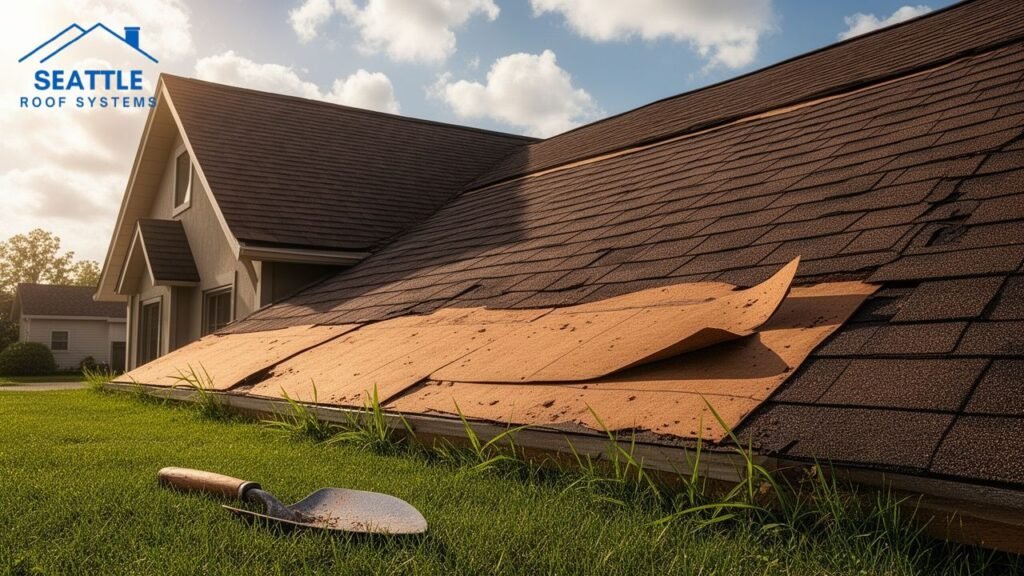
Shingles are the outermost layer of protection. Over time, high winds can peel them back, and hail can knock off the protective granules that shield the asphalt from UV rays. Once the shingles are compromised, the underlayment is exposed to the elements, and it is only a matter of time before water finds a way through.
2. Flashing Failures
Flashing consists of thin pieces of metal installed at “interruptions” in the roof, such as chimneys, dormers, and valleys. It is designed to direct water away from these vulnerable joints. If the flashing cracks, rusts, or pulls away from the surface, water will seep directly into the seams of the roof.
3. Clogged Gutters
When gutters are full of leaves and debris, water cannot flow off the roof. During heavy rain, this water backs up and can get underneath the shingles at the roof’s edge. In colder climates, this also leads to ice dams, where frozen water forces its way up the roof slope and into the house.
4. Cracked Vent Boots
Roof vents are necessary for attic ventilation, but they require a rubber seal, known as a boot, to stay watertight. These rubber seals often dry out and crack after 10 to 15 years of sun exposure, long before the shingles themselves fail.
5. Chimney Issues
Chimneys are a frequent source of leaks because they involve multiple materials meeting in one spot. The mortar can crumble, or the chimney cap might crack. If the counter-flashing around the base of the chimney is not sealed correctly, water will run down the bricks and into your attic.
Key Takeaway: Most roof leaks occur at “penetrations” or “intersections” like chimneys, vents, and valleys rather than in the middle of a flat expanse of shingles. Focusing your inspections on these areas is the most efficient way to find trouble.
The Physics of a Leak: How to Find the Source
Finding the source of a leak is often harder than fixing it. Water rarely drips straight down. It might enter through a hole near the peak of the roof, run down a rafter for ten feet, and then finally drip onto your ceiling.
The Attic Inspection
The best time to find a leak is during a rainstorm. Go into your attic with a flashlight. Look for wet spots on the wood or the “shimmer” of water reflecting your light. If it is dry outside, look for water stains, dark spots, or mold on the underside of the roof deck.
The Garden Hose Test
If you cannot find the leak visually, you may need to simulate rain. This requires two people: one on the roof with a hose and one in the attic with a flashlight. Our team at Seattle Roof Systems suggests starting the hose at the lowest point of the roof and slowly moving upward, soaking one area at a time. This methodical approach helps isolate the specific penetration that is failing.
Expert Tip: Look for “shiners.” These are nails that missed the rafter and are sticking out into the attic space. In cold weather, moisture from the house condenses on these cold nails, turns into frost, and then melts when the attic warms up, mimicking a roof leak.
Comparing Roof Repair Costs
The cost of a roof repair varies significantly based on the material, the slope of the roof, and the extent of the damage. Understanding these costs helps you budget for maintenance and avoid surprises when a professional provides an estimate.
Research published by HomeAdvisor indicates that the average homeowner spends between $400 and $1,800 for roof repairs, though major structural fixes can exceed this range.
Repair Type | Estimated Cost Range | Description |
|
Shingle Replacement |
$150 – $500 |
Replacing a small patch of blown-off or damaged shingles. |
|
Flashing Repair |
$300 – $1,000 |
Resealing or replacing metal around chimneys or valleys. |
|
Vent Boot Replacement |
$200 – $400 |
Swapping out old rubber seals for new ones. |
|
Skylight Repair |
$500 – $1,500 |
Fixing leaks around the glass or the integrated flashing. |
|
Major Structural Repair |
$2,000 – $5,000+ |
Replacing rotted rafters and decking after long-term leaks. |
Factors That Influence Pricing
Several variables can drive these costs up or down:
- Roof Pitch: Steeper roofs require more safety equipment and take more time to navigate, increasing labor costs.
- Material Availability: Speciality materials like slate, clay tile, or high-end metal will always cost more to repair than standard asphalt shingles.
- Layering: If your roof has multiple layers of shingles, finding and fixing a leak becomes much more labor-intensive.
DIY Roof Repair vs. Hiring a Professional
Many homeowners want to tackle repairs themselves to save money. While some tasks are manageable for a handy individual, others carry significant risks.
When to DIY
If the repair is minor and easily accessible, you might handle it yourself. Replacing a few shingles on a low-slope roof or clearing out gutters is relatively straightforward. You can find specialized roofing cement and replacement shingles at most hardware stores.
When to Call a Professional
You should hire a professional for any work that involves structural damage, extensive flashing issues, or very steep roofs. Professional roofers have the safety harnesses, ladders, and experience to work at heights without incident. Furthermore, a professional repair usually comes with a warranty. If the leak returns, the contractor is responsible for fixing it.
Safety is the primary concern. Data from the Bureau of Labor Statistics consistently shows that falls are a leading cause of injury in the construction and maintenance industry. Saving a few hundred dollars is not worth the risk of a serious injury. Understanding the specific requirements for different roofing materials is the next step in determining the best course of action.
Solutions for Different Roofing Materials
The strategy for fixing a leak changes depending on what is on your roof. Every material has its own set of vulnerabilities.
Asphalt Shingles
Asphalt is the most common material because it is affordable and easy to work with. Repairs usually involve lifting the shingle above the damaged one, removing the nails, and sliding a new shingle into place. We recommend using a specialized “roofing pry bar” to avoid tearing the surrounding shingles during this process.
Metal Roofing
Metal roofs are known for their durability, but they can leak if the fasteners back out over time. Metal expands and contracts with temperature changes, which can loosen the screws. The solution is often to replace the old screws with slightly larger ones that have fresh rubber washers.
Tile and Slate
These materials are heavy and brittle. You cannot simply walk on them without specialized equipment, or you will crack the tiles and create more leaks. Repairs usually involve “hooking” new tiles into place or using copper “bibs” to slide under cracked slats. This is almost always a job for a specialist.
Flat Roofs (TPO, EPDM, Built-up)
Flat roofs do not use shingles. They use membranes. Leaks here are usually caused by punctures or failing seams. Repairing these requires heat-welding a patch or using specialized adhesive tapes designed for the specific membrane type.
Prevention: How to Stop Leaks Before They Start
The most cost-effective way to handle a roof leak is to prevent it from ever happening. A proactive approach can extend the life of your roof by five to ten years.
Annual Inspections
You should inspect your roof at least twice a year: once in the spring and once in the fall. You do not necessarily need to get on the roof for this. A pair of binoculars from the ground can reveal missing shingles, sagging gutters, or cracked flashing.
Tree Maintenance
Overhanging branches are a major threat. They can scrape against shingles during windstorms, act as a bridge for squirrels and raccoons (who may chew through vents), and drop debris that clogs gutters. Keep all branches at least six to ten feet away from your roofline.
Attic Ventilation and Insulation
A roof that is too hot will “cook” the shingles from the inside out, causing them to become brittle and fail early. Proper ventilation allows heat to escape, while insulation prevents heat from your living space from reaching the roof deck in the winter. This balance is key to preventing ice dams.
Expert Tip: Never use a pressure washer on an asphalt shingle roof. The high-pressure stream will strip away the granules, effectively aging your roof by several years in a single afternoon. If you have moss or algae, use a gentle chemical treatment instead.
Long-Term Impact of Roof Health on Property Value
A well-maintained roof is a significant asset during a home sale. According to the National Association of Realtors, a new roof or a roof in excellent repair is one of the top features that attracts buyers and provides a high return on investment. Conversely, a roof with active leaks or visible patches can derail a sale or lead to heavy price concessions during the inspection phase.
Regular maintenance records are also helpful. If you can show a potential buyer that you have had the roof inspected and maintained annually, it builds trust and justifies a higher asking price.
Key Takeaway: Roof maintenance is not an expense; it is a form of equity protection. Spending $500 today on maintenance can prevent a $15,000 replacement bill five years down the road.
Common Tools for Roof Repair
If you decide to handle minor repairs, having the right tools is essential. Using the wrong tool can lead to further damage or injury.
- Pry Bar: A thin, flat bar is necessary for lifting shingles and pulling nails without tearing the asphalt.
- Utility Knife: Used for cutting shingles to size or trimming old vent boots.
- Caulking Gun: Essential for applying high-grade roofing sealant to flashing and nail heads.
- Hammer: A standard claw hammer works, but a roofing hammer with a built-in gauge is more precise.
- Safety Harness: If you are working on anything other than a flat, one-story roof, a harness is non-negotiable.
Frequently Asked Questions About Roof Leak Repair
How long does a typical roof repair take?
Most minor repairs, such as replacing a vent boot or a few shingles, can be completed in two to four hours. More complex issues involving flashing or structural rot can take one to two full days.
Can I repair a roof while it is raining?
You can apply emergency patches using “wet-patch” roofing cement while it is raining, but permanent repairs should wait until the surface is dry. Most adhesives and sealants require a dry surface to bond correctly.
My roof is only 10 years old. Why is it leaking?
Age is only one factor. A roof can leak early due to poor installation, storm damage, or lack of maintenance (like clogged gutters). Even a brand-new roof will leak if the flashing around the chimney was not installed correctly.
Will my homeowners’ insurance cover roof leak repairs?
Insurance typically covers leaks caused by “sudden and accidental” events, such as a fallen tree or hail damage. They generally do not cover leaks caused by wear and tear or lack of maintenance. Check your specific policy for details.
How do I know if I need a repair or a full replacement?
If the damage is localized to one area, a repair is usually sufficient. However, if the shingles are curling, losing granules across the entire roof, or if you have leaks in multiple rooms, it is likely time for a full replacement.
Is it okay to just put a new layer of shingles over the old ones?
While some building codes allow for two layers of shingles, we generally advise against it. Adding a second layer traps heat, makes it impossible to inspect the underlying roof deck for rot, and adds significant weight to the structure.
Putting Your Roof Leak Repair Strategy into Action
A roof leak does not have to be a disaster, provided you act quickly and methodically. Start by containing the water inside your home to prevent further damage to your belongings. Once the immediate situation is stable, use the techniques mentioned in this guide to locate the source of the entry.
Remember that the goal of any repair is to restore the “shedding” nature of the roof. Water should always flow downward and away from the structure. If a repair blocks the flow of water or creates a “pond,” it will eventually fail.
Regular maintenance remains the most effective tool in your arsenal. By spending a few hours each year inspecting your roof and clearing your gutters, you can avoid the stress and expense of an emergency repair. Keep this guide as a reference for your seasonal checks and as a manual for when things go wrong.
Need Expert Guidance?
If you are dealing with a complex leak or simply want the peace of mind that comes with a professional inspection, Seattle Roof Systems is here to help. Our team provides detailed assessments and long-term solutions for all types of roofing systems. You can reach out for a consultation to ensure your home stays protected through every season.
Seattle Roof Systems Phone: (425) 996-1386 Email: zoom@seattleroofsystems.com
Sources
- Federal Emergency Management Agency (FEMA) – Provides data and guidelines on mold growth and water damage recovery.
- HomeAdvisor – A leading resource for national averages on home improvement and repair costs.
- Bureau of Labor Statistics – Offers safety data and statistics regarding workplace injuries and fall risks.
- National Association of Realtors – Analyzes the impact of home maintenance and renovations on property value and ROI.