
Summarize with
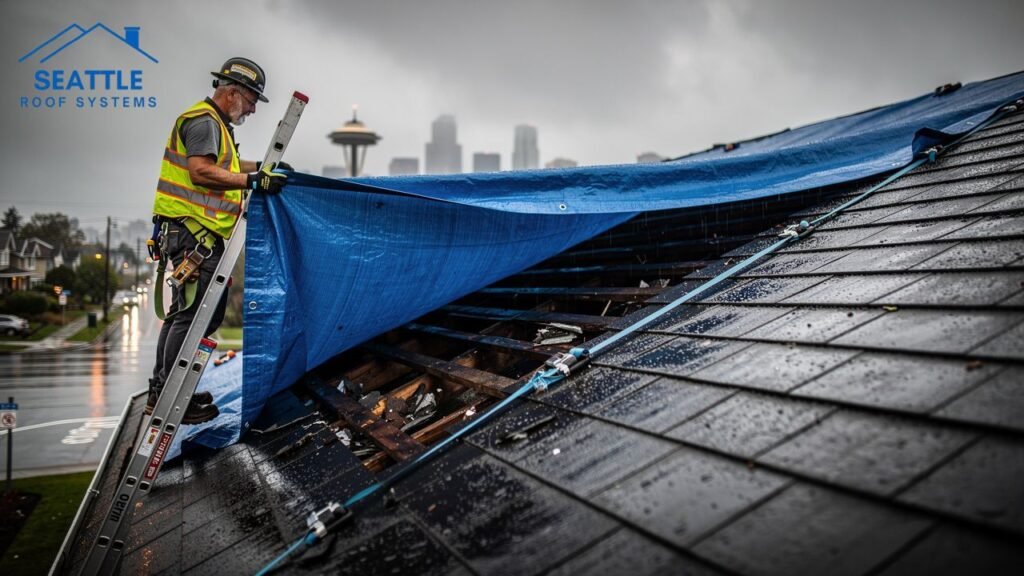
Your roof gets hit by a storm. Water starts pouring in. Emergency roof tarping in Seattle, WA is how you stop it before your ceiling collapses and your house gets destroyed inside.
We are Seattle Roof Systems and we have done hundreds of these tarps. This guide walks you through why they matter, what the crew does, and how to know if you need one today.
When to Tarp a Roof After Storm Damage
It is so simple.
- Can water get inside right now? If the answer is yes and you call today.
- Shingles blown off.
- Hole in the roof.
- Branch jammed through.
- Daylight coming through.
Those all need tarps. Small holes matter as much as big ones. A hole the size of a quarter still floods the room below it. Rain in Seattle doesn’t wait. Another system moves in a day or two.
That quarter-sized hole turns into water-damaged insulation, moldy drywall, and ruined flooring. The damage bill climbs to thousands. A tarp costs a few hundred bucks. Do the math.
Emergency Response and Public Safety: State guidelines for emergency response procedures or safety protocols during storm damage and requirements for protecting properties from further harm.
How Emergency Roof Tarping Works
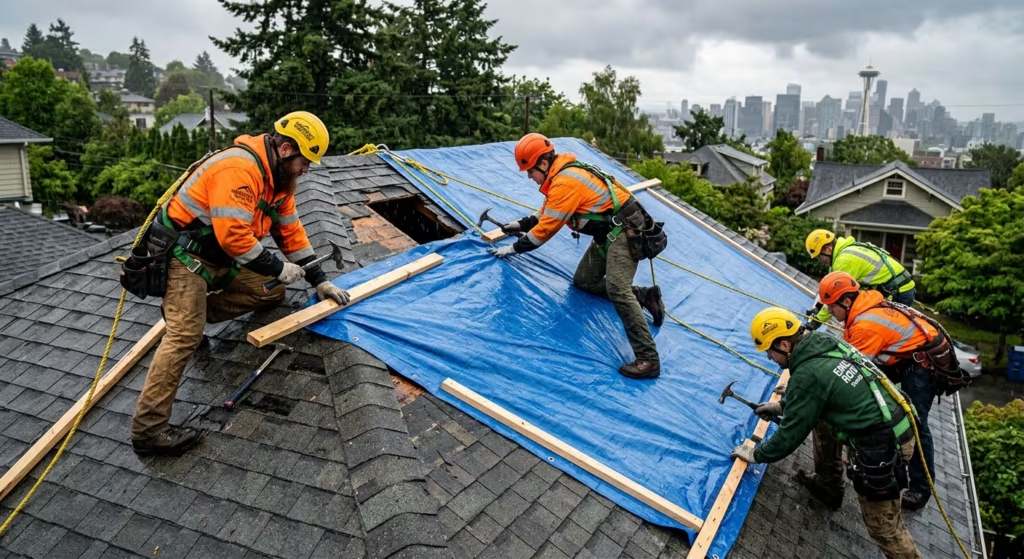
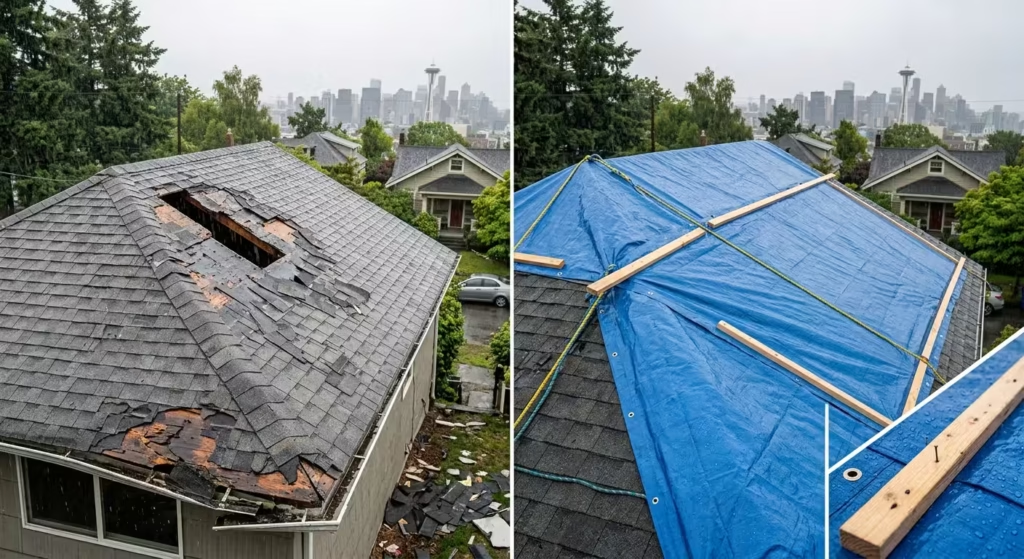
The crew shows up with heavy plastic, plywood, and fasteners. They look at the hole. They cut a tarp that covers the damage and extends 4 feet beyond it onto solid roof. Then they nail and strap it down so wind can’t get underneath.
Moreover, how emergency roof tarping works is basic but effective, like:
- The tarp holds until you get permanent repairs scheduled.
- That might be weeks.
- That might be three months.
- Insurance companies take time.
Contractors stay booked. The tarp keeps your house dry the whole time. A good tarp is not pretty. It’s not permanent. It’s temporary. It’ll fade from the sun.
It might get discolored. Wind will push on it. None of that matters. If no water is coming through, the tarp is winning.
Temporary Roof Protection After Storm Damage
Temporary roof protection after storm damage does one thing only. It buys time. You can’t fix a roof in one day. Insurance adjusters need time. Contractors are booked out. Meanwhile, the house needs to stay dry. That’s the job.
A tarp keeps rain out. It doesn’t insulate. It doesn’t look good. It won’t stop sideways wind from getting in if the hole faces that direction. It just stops vertical rain from hitting the damage.
Seattle actually helps here.
- Storms mostly come from the southwest.
- Wind usually doesn’t push upward from below the shingles.
- Our wind speeds stay lower than other regions.
- Tarps last longer here. Still watch it after ice storms.
- Wind from unusual angles can shift things.
- If something’s wrong you’ll see water inside.
When Does a Roof Need Immediate Protection
It’s obvious. Missing shingles all over the ground. A hole you can see daylight through. Water staining the ceiling inside. Sagging sections. Any of those mean one call today.
Some damage you can’t see from inside. A branch resting on the roof. It’s touching but hasn’t broken through yet. Wind in the next storm might do it. If you see that, get a roofer out. Don’t climb up yourself.
Hail puts dents in shingles. Tiny dents mean nothing. Deep cracks from big hail are different. Unsure? Take a photo and call. We can tell from photos if it’s urgent. No charge to ask.
How to Protect a Damaged Roof From Rain
How to protect a damaged roof from rain on your own is possible on flat roofs with small holes. Plywood and plastic sheeting held down with rope work for a couple of hours. That’s it.
Wind gets underneath. Rain finds the edges. Heavy rain pushes under anyway. It’s better than nothing while you wait for a crew but don’t expect it to hold for days.
Don’t climb a wet roof. Don’t climb in wind. Don’t climb alone. All three of those end badly. Interior damage from a few hours of rain is cheaper than a broken leg. Put buckets under the leak. Move the couch. Call us when the weather clears.
How Long Can a Roof Tarp Stay in Place
It usually takes 3 to 6 months before it degrades. Sun breaks down plastic. Wind pushes at it. Tears and holes develop. Mold can grow underneath if it stays forever.
Tarps are not permanent. Building codes forbid it. Insurance won’t pay for permanent tarping. You have to fix the roof eventually. Most customers arrange permanent repair within 8 to 12 weeks. If it takes longer the tarp will probably need reinforcing or replacing, which can affect the roof tarping cost.
Seattle weather is friendly to tarps. We don’t get the 60 mile per hour winds that other regions see. Our tarps last longer than they would in Texas or Florida. Still at 4 months you’re probably looking at a new tarp if permanent repair hasn’t happened.
Signs You Need Emergency Roof Tarping
Signals you need emergency roof tarping show up fast after storms.
- Water dripping from the ceiling.
- Shingles on the ground.
- Holes through to the sky.
- Flashing torn around vents.
- Sagging roof sections.
- Exposed wood and nails.
Some damage hides. Call your insurance company that same day and mention anything that looks wrong even if you’re unsure. Adjusters spot things homeowners miss. Once they confirm damage, that’s when you call us for tarping.
Don’t wait for the next rainstorm. Don’t guess that small damage doesn’t matter. Don’t assume it’ll dry out. Rain comes back in Seattle. Call the day you see damage. We at Seattle Roof Systems answer 24/7. Not as a slogan. We answer because water doesn’t care if it’s 3 AM on Sunday.
Emergency Roof Repair Seattle WA
It means tarping now and a permanent fix later. You need both. Tarp stops water. The repair actually fixes the roof.
After the tarp goes up you schedule the real work. Contractors get buried after major storms. Two to four weeks is typical. The tarp keeps water out that whole time. Insurance takes time to process too. That’s normal.
Some people repair before insurance comes through. Some wait for the adjuster. Both are fine. Just know the tarp is temporary. Winter will eventually break it. Ice will lift the edges. You have to get the permanent repair done.
Storm Safety and Preparedness: Official storm data and guidance specific to Seattle area weather patterns, wind speeds, and seasonal storm frequency.
Get the Crew to Work Right
Clear the ground below the damage. Move cars and junk away from the wall. Tell the crew about hazards like power lines or pools. They need ladder space and roof access.
Have damage photos ready. Have insurance info handy. Keep your phone on. The crew lead might call with questions while working.
Simple tarps take 30 minutes. Complex roofs with multiple holes take 90 minutes. You don’t have to be home but stay reachable by phone.
Call Now Before Water Gets Worse
Damage does not stop at 5 PM. Neither do we. Seattle Roof Systems answers 24/7 because storms hit when they hit.
Your roof is leaking right now. Call (425) 996-1386 today. Send photos to zoom@seattleroofsystems.com if you want. We cover Seattle and surrounding areas. We tarp today and you stay dry tonight.
Frequently Asked Questions
What happens if a tarp blows off during the wind?
Call right away for replacement. Good companies guarantee the tarp. Weather failure means they come back and secure it again for free. Get this in writing before they start.
Can insurance pay for my tarping?
Yes. Take photos. Keep receipts. Insurance covers tarping as part of storm damage. The adjuster includes it. Most tarps cost $400 to $800. Water damage costs thousands. The math is obvious.
How soon can you get here?
Same day if you call before 6 PM. After hours gets priority the next morning unless water is actively coming in right now. Then we come tonight.
Do you climb on the roof to look?
Not if photos work. Good photos tell us what we need to know. If something’s unclear or structural damage is possible we’ll send someone up. Usually same day.
What does emergency tarping cost?
$400 to $900 for most roofs depending on size and damage location. That includes material and labor. Pricing is at the normal rate. We don’t double price during storms. Call and we’ll quote you over the phone if we can see it in photos.
Does the city require permits for tarping?
No permits needed for temporary tarping. Permits only apply to permanent repairs. This helps you. Get the house protected today. Handle permits later for the permanent fix.
What if a tree fell on the roof?
Tarping is first. Then the tree needs removal if a branch is still stuck in the roof. That’s separate work. Insurance usually covers both removal and roof repair if tree damage is covered on your policy. Read your paperwork.
Can I live there while the roof is tarped?
Yes. The house stays sealed. Everything inside stays normal. You’ll hear wind pushing the tarp. Some people think that’s weird but it means the tarp is working and taking the force instead of the damaged roof.
Sources
Washington State Department of Labor & Industries: References requirements for securing damaged properties temporarily in Washington state.
National Weather Service Seattle: Provides context for Seattle’s specific weather conditions that affect roof tarping needs.