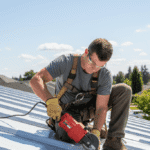
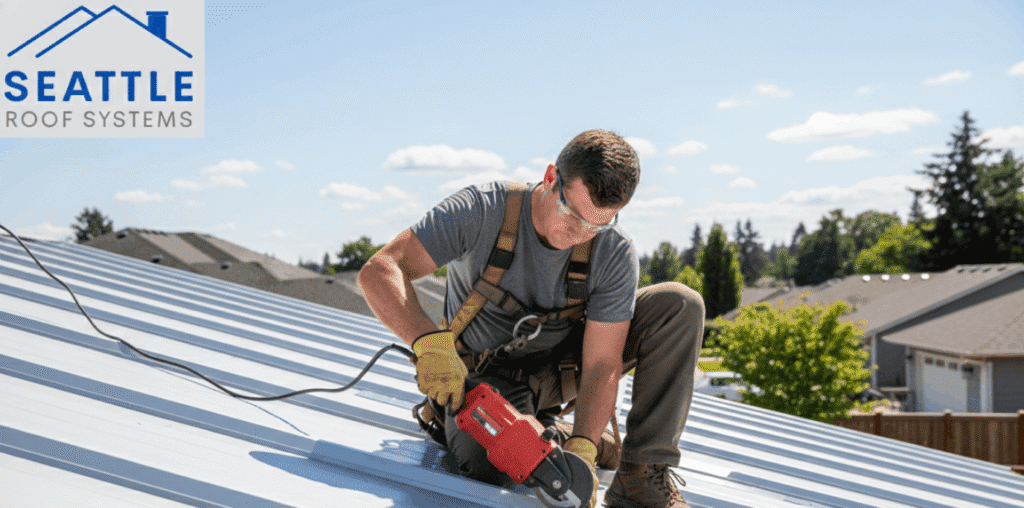
Cutting metal roofing material requires selecting the right tool based on the specific metal gauge and the complexity of the cut. For long straight lines, electric shears or nibblers provide the cleanest edges without damaging the protective coatings. Small trims and detailed curves are best handled with manual aviation snips, while a circular saw equipped with a dedicated metal-cutting blade works well for high-volume straight cuts. Cold-cutting methods are always preferred because tools that generate excessive heat, such as abrasive grinders, can melt the protective zinc or paint layers and lead to premature rust.
Correct execution ensures the longevity of the roof by maintaining the integrity of the material. Seattle Roof Systems provides this guide to help users choose the most effective methods and tools for residential or commercial metal roofing projects. Success depends on understanding how different tools interact with steel and aluminum to prevent burrs, scratches, and edge corrosion.
Selecting the Right Tools for the Job
The choice of tool often depends on the profile of the metal being used. Flat sheets used for flashing require different handling than corrugated or ribbed panels. Using the wrong tool can result in jagged edges or distorted ribs that make installation difficult.
Aviation Snips
Manual snips are indispensable for small jobs and detailed work. They come in three varieties: straight-cut (yellow handles), left-cut (red handles), and right-cut (green handles). Red snips make it easier to cut counter-clockwise curves, while green snips are better for clockwise movements.
Bonus Tip: When using manual snips, do not close the blades all the way to the tip for every stroke. Closing them fully often creates a small “burr” or “dent” at the end of the cut. Stop just before the tips meet to keep the line smooth.
Electric Shears and Nibblers
Electric shears work like motorized scissors. They remove a thin strip of metal, usually about 1/4 inch wide, as they move forward. This prevents the metal from warping. Nibblers, on the other hand, “punch” out tiny bits of metal. According to technical data from McElroy Metal, nibblers are particularly effective for cutting across ribs in corrugated panels because they do not distort the shape of the metal as they climb over the ridges.
Circular Saws with Metal Blades
A standard circular saw can cut metal if it is fitted with a carbide-tipped metal-cutting blade. These blades are designed to cut at lower temperatures than abrasive wheels. While fast, this method is loud and produces a significant amount of metal shavings, often called “swarf.”
Tool Comparison for Metal Roofing
| Tool Type | Best Use Case | Metal Gauge Capacity | Edge Quality |
|---|---|---|---|
| Aviation Snips | Notches, curves, and flashing | Up to 24 gauge | High (No heat) |
| Electric Shears | Long, straight cuts on flat panels | Up to 18 gauge | Very High |
| Electric Nibblers | Cutting across corrugated ribs | Up to 18 gauge | Clean (No distortion) |
| Circular Saw | Multiple panels, straight cuts only | Multiple sheets | Moderate (Requires cleanup) |
The Impact of Heat on Metal Longevity
Thermal damage is a leading cause of early roof failure. Many metal panels feature a Galvalume coating, which is a mix of aluminum and zinc. A report from the Metal Construction Association highlights that high-heat cutting methods, such as using a gas-powered saw or an abrasive blade, can liquefy these coatings. When the coating melts away from the edge, the underlying steel is left exposed to the elements.
This vulnerability leads to “edge creep,” where rust begins at the cut line and slowly moves up the panel. Cold-cutting tools like snips or shears actually pull some of the protective coating over the cut edge as they pass through, providing a small amount of “self-healing” protection.
Steps to Prepare and Cut Metal Panels
Preparation is just as important as the cut itself. Accurate measurements and a stable work surface prevent mistakes that can waste expensive material.
- Marking the Line: Use a permanent marker or a carpenter’s pencil. For dark-colored panels, a white marking pencil is easier to see. Do not use a scribe or a sharp object that scratches the paint, as these scratches can turn into rust spots.
- Support the Material: Place the panel on a flat, stable surface. If using a circular saw, support both sides of the cut to prevent the metal from binding or vibrating, which can cause the blade to kick back.
- Cutting from the Back: When using a circular saw or shears, some professionals prefer to turn the panel over and cut from the back side. This ensures that any metal shavings or “swarf” do not land on the finished paint surface, where they could melt into the coating.
- Cleanup: Immediately after cutting, use a soft brush or a leaf blower to remove all metal shavings. If left on the roof, these tiny particles will rust overnight and stain the new panels.
Bonus Tip: Keep a small container of touch-up paint provided by the manufacturer on hand. Even with the best tools, a small amount of the core steel is exposed at the cut edge. Dab a little paint on these edges to provide an extra layer of defense against moisture.
Things to Consider Before Making a Decision
Before picking up a tool, it is important to evaluate the specific needs of the project, as a tool that works for a small shed might be inefficient for a whole house.
- Panel Profile: Is the metal flat, or does it have high ribs? Nibblers are superior for high-profile ribs where shears might get stuck.
- Total Linear Feet: If the project requires hundreds of feet of cuts, manual snips will lead to hand fatigue and uneven edges. Invest in or rent power shears.
- Coating Type: Premium coatings like Kynar 500 are highly sensitive to heat. Always use cold-cutting methods on high-end painted panels.
- Safety Requirements: Power tools for metal cutting are extremely loud and produce sharp debris. Ensure all safety gear is ready before starting.
Market Trends in Metal Roofing
As these specialized installation techniques become the industry standard, market data reflects a corresponding shift in consumer preference toward durable materials. The demand for these products is rising as homeowners seek more durable alternatives to asphalt. Data from Dodge Construction Network indicates that metal roofing now accounts for a significant portion of the residential remodeling market. This growth is driven by the material’s ability to last 50 years or more when installed correctly. Because the installation and cutting process is more technical than traditional roofing, the emphasis on proper tool usage has become a standard for ensuring these long-term warranties remain valid.
Common Questions about Cutting Metal
Can a reciprocating saw be used? While possible with a fine-tooth metal blade, a reciprocating saw is difficult to control on thin roofing panels. It often causes the metal to vibrate violently, leading to jagged edges and potential injury. It is better suited for demolition than for precision installation.
Is it safe to cut metal roofing in the wind? Large panels act like sails. High winds can catch a panel mid-cut, causing it to buckle or fly off the work surface. Always wait for calm conditions to ensure both safety and accuracy.
What is the best way to cut a hole for a vent pipe? Start by drilling a pilot hole inside the marked circle. Use a pair of red or green aviation snips to cut the circle in a spiral fashion. This allows the metal to curl out of the way as you work, resulting in a cleaner hole for the flashing boot.
Frequently Asked Questions
Will cutting metal roofing void my warranty?
Most manufacturers only honor warranties if the material is cut using approved cold-cutting methods. Using a grinder or an abrasive saw blade is a common reason for denied warranty claims because of the heat damage caused to the factory finish.
How do I prevent the cut edges from rusting?
The best prevention is using a cold-cut tool that doesn’t burn the coating. Additionally, applying a manufacturer-approved touch-up pen to the raw edge seals the steel from oxygen and moisture.
Can I cut multiple panels at once?
A circular saw with a carbide-tipped metal blade can cut through a stack of two or three panels. However, you must ensure the panels are clamped tightly together to prevent vibration and ensure a uniform cut across all sheets.
What safety gear is necessary when cutting?
The Occupational Safety and Health Administration recommends eye protection to guard against flying metal chips and cut-resistant gloves to prevent lacerations from sharp edges. Ear protection is also vital when using power shears or saws.
Is it better to cut the metal before or after it is on the roof?
Almost all cutting should be done on the ground. This provides a stable environment for accuracy and ensures that metal shavings do not accumulate on the roof surface, where they can cause staining and scratches.
Summary of Best Practices
Cutting metal roofing successfully requires a focus on precision and temperature control. Prioritizing cold-cutting tools like electric nibblers and shears preserves the protective coatings that make metal roofing a long-lasting choice. Always clean away metal shavings immediately and seal cut edges with touch-up paint to prevent corrosion. Every project is unique, so evaluate the metal gauge and profile before selecting a tool.
Expert Guidance for Your Project
Choosing the right approach for a metal roof depends on the architecture of the building and the specific material selected. For those looking for professional assistance or detailed information on material compatibility, Seattle Roof Systems offers expertise in local roofing requirements. Reach out at (425) 996-1386 or via email at zoom@seattleroofsystems.com to discuss project specifics or to receive professional guidance on ensuring a durable, high-quality installation for any property.
Sources
- Metal Construction Association – An industry organization providing technical manuals and research on metal building materials.
- McElroy Metal – A leading manufacturer of metal roofing systems with extensive resources on installation and tool selection.
- Grand View Research – A market research firm providing data on the growth and trends within the construction material industry.
- Occupational Safety and Health Administration – The federal agency responsible for setting and enforcing safety standards in the construction workplace.
- Dodge Construction Network – A provider of construction project data and market analytics for the North American building industry.