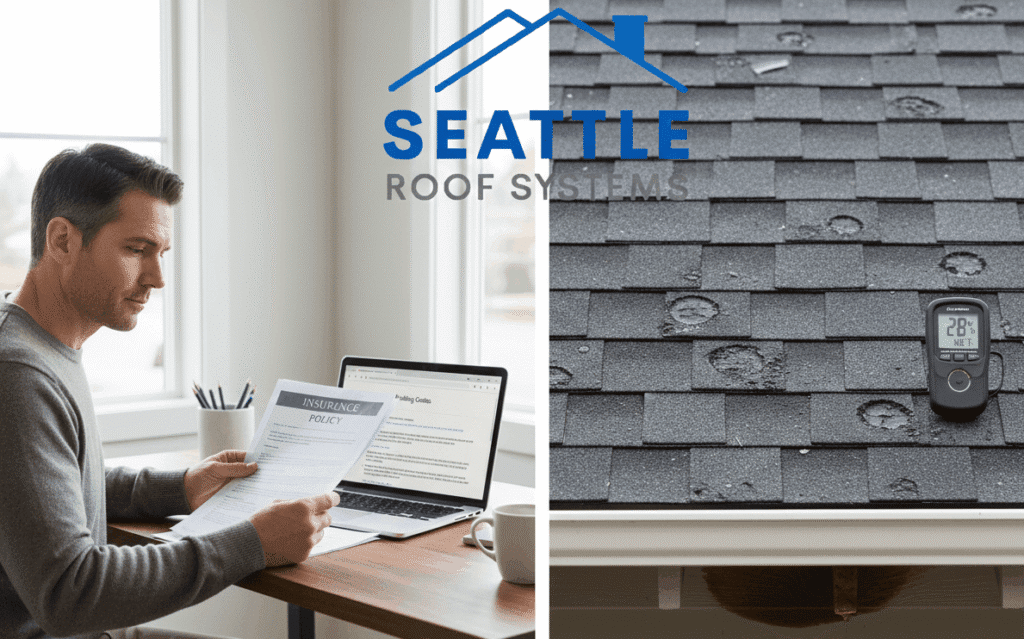
Homeowners insurance generally covers roof leaks when a sudden, accidental event causes the damage. Standard policies protect against specific hazards like heavy wind, hail, falling objects, or lightning. If a storm rips shingles off a house and water enters the home, the insurance company typically pays for the repairs to both the roof and the interior damage. This coverage applies because the event was unexpected and outside the control of the property owner.
Insurance does not cover roof leaks resulting from age, lack of maintenance, or general wear and tear. If a roof is twenty years old and begins to leak because the materials have reached the end of their functional life, the policyholder is responsible for the costs. Insurance is designed to manage risk from sudden disasters, not to replace the standard maintenance duties of owning a home. Seattle Roof Systems provides this overview to help property owners understand the distinction between covered claims and out-of-pocket expenses.
Understanding Covered Perils and Policy Limits
Most standard homeowners policies, often called HO-3 policies, operate on an open-peril basis for the dwelling. This means the roof is covered for all causes of loss unless the policy specifically excludes them. Common events that trigger coverage include high-speed winds that lift shingles, large hail that punctures the roof surface, and heavy snow loads that cause structural failure. According to data from the Insurance Information Institute, wind and hail damage represent one of the most frequent causes of property insurance claims in the United States.
When a leak occurs due to one of these events, the insurance company looks at the specific language of the policy. Some policies provide Replacement Cost Value, which pays to install a new roof of similar quality. Others provide Actual Cash Value, which factors in depreciation based on the age of the roof. If a roof is ten years old and has a twenty-year life expectancy, an Actual Cash Value policy might only pay half of the total replacement cost.
Common Exclusions in Roof Coverage
Insurance companies expect homeowners to keep their properties in good repair. Neglect is the primary reason for claim denials. If a leak starts because the flashing around a chimney has rusted over a decade, the insurer will likely view this as a maintenance failure. Similarly, damage from squirrels, raccoons, or birds is often excluded from standard coverage.
Policies also frequently exclude damage from mold or rot that develops over a long period. If a small leak goes unnoticed for years and causes structural decay, the insurance company may pay for the initial storm damage but refuse to pay for the extensive mold remediation. This is why regular inspections are necessary to catch minor issues before they become uninsurable problems.
Bonus Tip: Check the attic for streaks on the wood or damp insulation twice a year. Detecting a small leak early can prevent a massive repair bill that insurance might refuse to cover.
Analyzing Coverage by Scenario
The following table outlines how insurance companies typically view different causes of roof leaks.
| Cause of Leak | Likely Coverage Status | Reason for Decision |
|---|---|---|
| Windstorm or Tornado | Covered | Sudden and accidental peril |
| Hail Damage | Covered | Physical damage from weather event |
| Falling Tree or Branch | Covered | Impact from an external object |
| Roof Age (25+ Years) | Denied | Materials exceeded expected lifespan |
| Clogged Gutters | Denied | Preventable maintenance issue |
| Pest Infestation | Denied | Gradual damage from animals |
| Vandalism | Covered | Intentional damage by third party |
Consequential Damage and Interior Repairs
Understanding these specific classifications is vital, as even if an insurance company denies a claim for the roof repair itself, they might still cover the damage inside the home. This is often referred to as consequential damage. For example, if an old roof leaks during a rainstorm and ruins the drywall and hardwood floors, the insurer might deny the roof repair due to its age. However, they may still pay to fix the walls and floors because the water intrusion was a sudden event.
Property owners should review their “dwelling coverage” and “personal property coverage” sections to understand these limits. A report by Forbes Advisor mentions that the average cost of a roof claim can exceed $12,000, making it essential to know which parts of the claim are eligible for reimbursement.
Decisions to Make Before Filing a Claim
Filing a claim is not always the best financial move. Seattle Roof Systems suggests looking at the total repair cost versus the policy deductible before contacting an insurance agent. If the repair costs $1,200 and the deductible is $1,000, filing a claim for a $200 payout may not be wise. Multiple claims in a short period can lead to increased premiums or even policy non-renewal.
Homeowners should also consider the “matching” laws in their state. Some states require insurance companies to replace the entire roof if the original shingles are no longer available and a patch would result in an unsightly, mismatched appearance. Other states only require the insurer to fix the damaged area, regardless of the visual result. Knowing these local regulations helps set realistic expectations for the outcome of a claim.
Documenting the Damage Effectively
Success in an insurance claim depends heavily on documentation. After a storm, the homeowner should take clear photos of the roof from the ground and any visible interior damage. It is helpful to keep receipts from previous maintenance or minor repairs to prove the roof was in good condition before the event.
If a leak is active, the homeowner has a “duty to mitigate” further damage. This means they must take reasonable steps to stop more water from entering, such as placing a tarp over the hole or putting buckets under the leak. According to guidelines from Bankrate, failure to prevent further damage can lead to a partial denial of the claim.
Bonus Tip: Store digital copies of your roof installation contract and warranty in the cloud. Having these documents ready can speed up the claims process significantly.
Common Questions About Roof Insurance
Can I get a new roof for free if it is old?
No. Insurance is not a replacement for a maintenance fund. While some homeowners hope for a storm to provide a free roof, adjusters are trained to distinguish between fresh storm damage and long-term deterioration.
Does insurance cover leaks from ice dams?
Yes, most policies cover leaks caused by ice dams. This occurs when snow melts on the upper parts of the roof and refreezes at the cold eaves, forcing water up under the shingles. Because this is weather-related, it is usually a covered peril.
Will my rates go up if I file a claim for a leak?
It is possible. Rates often depend on whether the claim was for a “catastrophe,” like a massive hurricane that affected the whole neighborhood, or an isolated incident. Frequent claims generally lead to higher premiums.
What if my insurance company denies the claim?
Homeowners have the right to appeal. This often involves hiring a public adjuster or getting a second opinion from a professional roofing contractor to provide a more detailed inspection report that contradicts the initial findings.
Frequently Asked Questions
Does insurance cover a roof leak from a solar panel installation?
Typically, no. If the leak is caused by improper installation or a contractor’s error, the homeowner must seek compensation from the installation company’s liability insurance rather than their own homeowners policy.
How long do I have to file a claim after a leak is discovered?
Most policies require claims to be filed within one year of the event, but this varies by state and provider. Waiting too long can make it difficult to prove that a specific storm caused the damage.
Is a leaking skylight covered?
If a hailstone breaks the glass of a skylight, it is covered. If the seals around the skylight have dried out and cracked over several years, it is considered a maintenance issue and is usually not covered.
Does homeowners insurance cover emergency tarping?
Yes, most policies cover the cost of temporary repairs meant to prevent further damage. Keep all receipts for materials or professional tarping services to include in the final claim submission.
Will insurance pay for a roof that was installed incorrectly?
Standard policies usually exclude “faulty workmanship.” If a roof leaks because the previous contractor failed to install underlayment correctly, the current insurance policy will likely deny the claim for the roof repair.
Summary of Coverage Principles
Navigating roof leak coverage requires a clear understanding of the difference between sudden damage and gradual wear. Insurance serves as a safety net for unpredictable events like storms and falling trees. It does not replace the need for regular inspections and proactive repairs. Property owners should review their policy details, specifically the difference between replacement cost and actual cash value, to understand their financial exposure. Evaluating the cost of repairs against the deductible is a vital step before initiating the claims process. Staying informed about the condition of the roof and maintaining detailed records ensures that when a disaster strikes, the homeowner is prepared to handle the insurance process effectively.
Specialized Assistance for Your Roof
Professional guidance is often necessary when dealing with complex roof issues and insurance requirements. For detailed assessments and expert inspections, contact Seattle Roof Systems at (425) 996-1386. Detailed inquiries regarding roof conditions or repair estimates can be sent to zoom@seattleroofsystems.com. Taking prompt action after a leak can protect the integrity of the property and ensure that all necessary documentation is prepared for potential insurance reviews.
Sources
- Insurance Information Institute – Provides comprehensive data on the causes of homeowners insurance claims and industry statistics.
- Forbes Advisor – Offers expert analysis on the costs of roof replacement and how different insurance policies handle claims.
- Bankrate – Details the steps for filing a homeowners insurance claim and the responsibilities of the policyholder during the process.
- ValuePenguin – Breaks down the differences between replacement cost and actual cash value for roof insurance coverage.