Summarize with
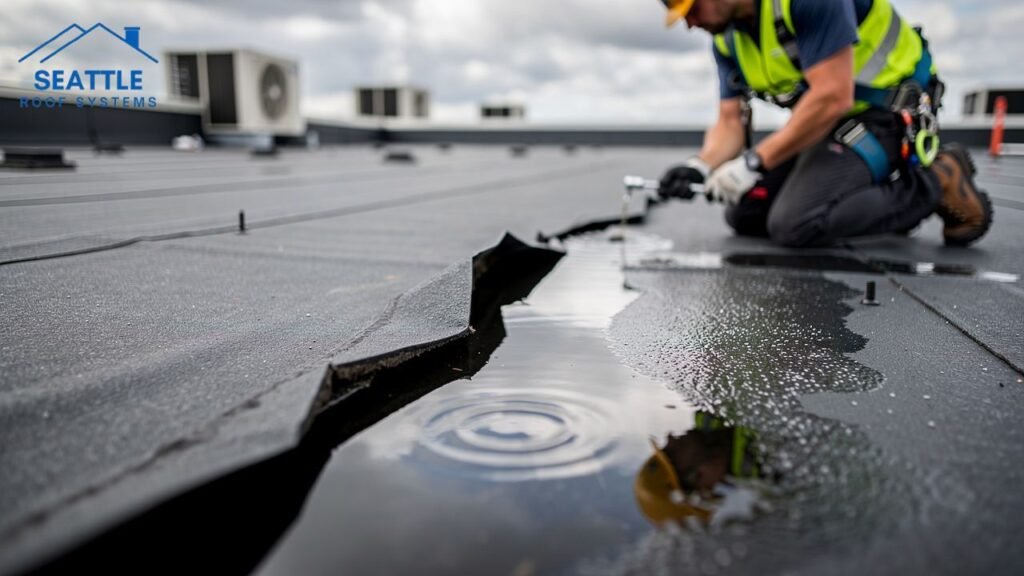
Most flat roof problems in Seattle are due to standing water. It remains there or is absorbed as it seeps through a seam, and after a couple of weeks, someone finds a brown spot on the ceiling. Before you read on, let’s get some preliminary details off the table: The city wants a re-roof permit if you need a roof replaced on a commercial or multifamily building or if the repair is more than 500 square feet. Here we have been working with low slope roofs for over 10 years.
November alone averages 6.3 inches. July barely gets 0.6. The average annual high is just 61.3 degrees so the heat damage you read about in guides from hotter states is not our main worry. Moisture is. A roof here spends months soaked and then gets a short dry window to recover.
Common Flat Roof Problems Seattle Property Owners Face
Ponding water and blocked drains are the source of trouble. Many problems are shown in the table:
| Problem | Warning sign | Seattle trigger |
|---|---|---|
| Ponding water | Puddles that last over 48 hours | Months of steady winter rain |
| Clogged drains | Overflow at scuppers after storms | Fir needles and maple leaves |
| Torn or split membrane | Cracks or lifted seams | Foot traffic and fallen limbs |
| Failed flashing | Stains around vents and walls | Sealant that never fully dries |
| Moss and algae | Green or black growth on seams | Shade and slow drying |
| Wet insulation | Spongy spots underfoot | Slow leaks nobody sees |
| Poor installation | Leaks in the first few years | Rushed work and skipped details |
Poor installation deserves a second look because it is avoidable. A badly lapped seam can survive a whole dry summer and then quit the first wet November. Roof under five years old and leaking in more than one place? Find out who installed it. Then ask what the workmanship warranty says.
How Flat Roof Leaks Develop During Seattle Rainstorms
Flat roof Leaks frequently occur at seams, flashings or drains. The biggest open extent of membrane is hardly to blame. A roof throws water off. A flat one just sits there so the water goes looking for a way in. Duration matters as much as volume. A summer shower is gone in twenty minutes. A November soaker lasts for hours and a weak joint has time to give.
And here is the part that fools people: the stain on your ceiling is probably not under the hole. Water travels along the deck first. That is why patching directly above the stain so often fails and the leak is back by the next storm. Wet insulation is the other culprit. When it is saturated it stops insulating and keeps water pressed against the deck. If a roof keeps leaking after several patches the water may already be trapped inside.
Flat Roof Drainage Problems and Their Root Causes
Flat roof drainage problems begin with a blocked drain or scuffs in the roof surface. Standing water is constantly damaging the roof membrane and deck. Check the trees first. Fir needles, maple leaves and moss are piling up around the drains. One October windstorm can plug a drain solid
And if the drain is set up above the membrane around the drain, the water will be trapped by design. Rinse away the debris and re-check after a subsequent rainfall. If it still does not drain the drain was only part of the issue. May require scupper or drain to be in a better position, or tapered insulation.
How to Prevent Flat Roof Problems Before Winter Rain Starts
Clear drains and fix the small damage until October comes. Do it every year to save your roof from many defects. Here is the order we have to follow:
- Clear drains and scuppers in early October. Do it again in January.
- Following the first large storm, inspect seams and flashings from a safe point or via drone photos.
- Take photos of seams and penetrations each spring and fall for comparison.
- Prune branches that overhang the house.
- Use a soft brush and hand to pull moss. Avoid using a pressure washer as it may raise seams and drive water under edges.
- Maintain a “Walk Pad” for foot traffic.
- Fix small cuts and cracks between June and September while the roof is dry.
Flat Roof Maintenance Schedule for Seattle Climate
Flat roof maintenance typically requires only two inspections annually and a quick post storm look. The best time to do it is early fall and late spring.
| Season | What to do |
|---|---|
| Fall (September and October) | Clear drains. Check flashing. Seal edges before the rain starts |
| Winter (November to February) | Watch ceilings for stains after storms. Keep drains open. Stay off a wet roof |
| Spring (March to May) | Inspect the membrane for winter damage. Remove moss |
| Summer (June to August) | Schedule repairs and coatings in the driest months |
Why summer for repairs? June averages 1.5 inches of rain. July is down at 0.6 and August is 1.0. Adhesives and seams bond better on a dry deck, so that is when the work sticks.
Flat Roof Repair: Steps Professionals Follow
A great flat roof repair starts by finding where the water comes inside and covering that area with fixing material. There will be a time before the season is over when you’ll be calling again.
- Use a moisture scan or controlled water test to trace the leak.
- Remove wet insulation and allow deck to dry.
- Fit a patch or replace a section of membrane that is compatible with the existing membrane.
- Resolve the cause: a drain or flashing or a low spot.
- Test the repair and take a picture of it for documentation.
There are some jobs that do not require a roofer. A drain full of leaves that you can reach safely takes ten minutes with gloves and a bucket and honestly we would rather you do it than bill you for it. Anything that involves the membrane or climbing onto a wet roof is different. Call us for those.
Hiring a Registered Roofer in Washington
Washington contractors be registered with the state and you can check in a couple of minutes. The Washington L&I verify tool shows registration, bond, insurance and past infractions.
Do the lookup before you accept any bid. Then get a written scope that names the leak source, the materials and the warranty. A contractor who pushes back on either one is not the right fit.
Flat Roof Waterproofing Options and When to Renew
The membrane or coating that holds the water from entering the building is called flat roof waterproofing. Replace when the surface cracks/blisters or when leaks reappear after repairs. Typically, this is done using EPDM rubber, modified bitumen or a single ply TPO or PVC.
When the insulation is dry and the deck is good, a liquid coating will provide additional years. It cannot save a roof that is soaked underneath. Nothing painted on top will.
Seattle Permit and Energy Code Rules for Roof Work
Homes and apartments are exempt from the roof repair permit as long as the building envelope stays the same apart from insulation. Commercial and multifamily roofs need one for replacement or any repair over 500 square feet.
The energy code adds a catch. If sheathing or insulation is exposed during the work Seattle requires insulation up to current standards and the code bars reducing the existing insulation value. A contractor who skips over that can hand you a code problem plus a second round of flat roof problems.
Quick Tips and Key Takeaways for Seattle Flat Roofs
Short on time? Do two things: clear the drains before October and photograph every seam each spring.
| Tip 1: Walk out after the first heavy rain (or look from a window). Water still standing at 48 hours means a drainage fault. |
| Tip 2: Check ceilings and the attic after every windstorm. A small stain costs far less to fix than soaked insulation. |
Key takeaways
- Water that stays is behind most flat roof problems.
- Drains and seams give out first in a wet Seattle winter.
- Do repairs in summer.
- Small fixes cost less than replacing saturated insulation.
| Pro tip: Ask any roofer for moisture scan results and photos before you approve a repair. They show where the water is. Without them you are paying a person to guess about your flat roof problems. |
Frequently Asked Questions For Flat Roof
What is the 25 rule in roofing?
If over 25 percent of the roof area of a roof is repaired or replaced within 12 months, some codes mandate upgrading the entire roof area. It is most stressed in Florida. It is instead based on the 500 square foot limit in Seattle. Some insurance companies use a comparable test, so it is wise to inquire your insurer.
Why do not insurance companies like flat roofs?
Small defects are transformed into interior claims and leaks due to the slow release of water. Some even impose higher rates or request an inspection report for older roofs. Your agent will be able to tell you what your options are.
What are some common problems that occur with flat roofs?
The top causes of water damage are ponding water, leaks. Then there are wet insulation, torn membranes and clogged drains, and finally moss. There are many behind them for poor installation.
Is $30000 too much for a roof?
Not necessarily. Take the quote and divide by square footage of roof and compare this figure between written quotes. Whether or not the work is needed is what counts: tear off to deck and tapered insulation/drain work.
Can a roofer sue me if he falls off my roof?
If the injury was a result of a known and unknown danger, he can file a claim. All contractors who have employees must obtain workers compensation coverage with L&I. So, get registered, insured people to hire. The information provided is not legal advice.
What is the average lifespan of a flat roof?
The typical life of a membrane system is from 15 to 30 years. It will depend on the material, drainage and maintenance.
How much would it cost to fix a flat roof?
This will be dependent on the location of leakage, the roof area, and the moisture conditions of the roof’s insulation. Typical flat roof repair is within the CLIENT PRICE RANGE. Those are all captured in a good quote.
Why does my flat roof leak in heavy rain?
Seams and flashings and drains give out first. Trapped water and soaked insulation can also hold a leak back until a long storm finally shows it.
How much does a flat roof repair cost?
The cost depends on where the leak is, how much roof area is affected, and whether the insulation underneath is wet. Our flat roof repair cost guide explains what drives the price. Ask for a written quote that names the leak source and materials.
Is it better to repair or replace a flat roof?
Repair if the damage is local and the insulation is dry. Replace if leaks keep showing up in different places or a moisture scan finds wet insulation across much of the roof.
Will homeowners insurance cover a roof repair?
Usually only when a sudden covered event caused the damage. The Washington Office of the Insurance Commissioner explains that a policy is a contract that lists covered events such as fire and lightning and falling objects. Age and wear are normally excluded. Take photos before any repair starts.
Can a flat roof be repaired?
Yes. Most can, as long as the deck and insulation are sound.
Schedule a Professional Flat Roof Inspection
Seattle Roof Systems has been doing this for more than 10 years. License #SEATTRS752DC. Book before November and you have got a real shot at dodging flat roof problems this winter.
Call (425) 996 1386 or email zoom@seattleroofsystems.com to book. We trace the leak and photograph the cause and give you a written scope before any work starts.
______________________________________________________________________
Sources
- Seattle SDCI Re-Roof Permit page: cited for the 500 square foot rule, the exemptions and the insulation requirement.
- Washington L&I online verify tool: cited for checking registration, bond, insurance and infractions.
- Washington Office of the Insurance Commissioner homeowner insurance guide: cited for how covered events work.